Leg Day Done Right: How to Build Stronger Legs and Glutes With Squats, Romanian Deadlifts, Lunges and a 4-Week Plan
Last updated: November 29, 2026
Quick summary
Your legs and glutes hold the biggest muscles in your body. Training them regularly raises overall strength, supports calorie burn and protects your back and knees. Start with five exercises: squats, Romanian deadlifts, lunges, hip thrusts and calf raises. Train legs twice a week, doing about 3 sets of 8 to 12 reps per exercise, and add load gradually each week with enough protein and good sleep.
Many people train chest and arms with enthusiasm and then skip leg day, either because it is tiring or because the movements seem complicated. The problem is that your legs and glutes drive your daily movement: walking, climbing stairs, standing up from a chair and carrying shopping. The stronger these muscles are, the more efficient your body is and the less likely you are to get injured. In this guide we explain why leg day deserves a place in your week, how to perform the key exercises with sound technique, and a practical four-week plan suited to beginners and intermediate lifters.

Why train your legs and glutes?
The quadriceps, hamstrings and glutes are among the largest muscle groups, so training them demands more energy than training small muscles. Regular work helps you to:
- Raise overall strength: leg strength carries over to your other lifts and to daily life.
- Support body composition: building muscle supports metabolism and improves how your body looks.
- Protect your joints: strong muscles around the knee and hip reduce the load on the joint.
- Improve performance: from running to long walks in hot weather.
Remember that training alone is not enough. Progress comes from training combined with nutrition and sleep, not from any one of them on its own.
The five key exercises with correct form
1) The squat
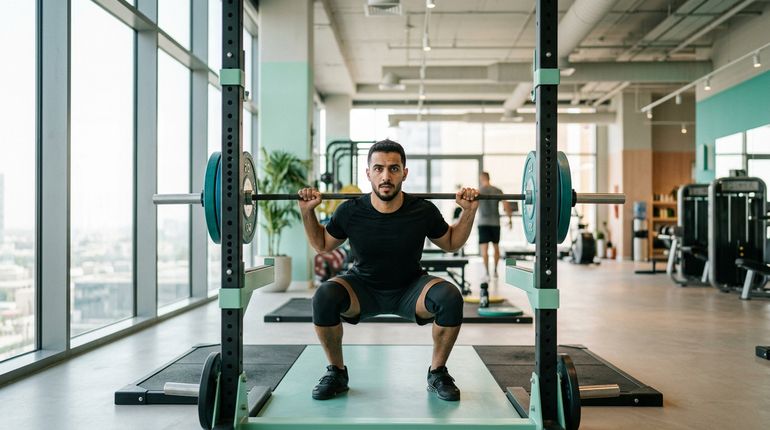
Stand shoulder-width apart with your toes turned out slightly. Brace your abs and lower with control as if sitting on a chair behind you, keeping your chest up and your knees tracking over your toes. Go down until your thighs are parallel to the floor, or as far as your mobility allows without your lower back rounding, then drive through your whole foot to stand. Begin with bodyweight or a goblet squat using one dumbbell before moving to a barbell.
2) The Romanian deadlift
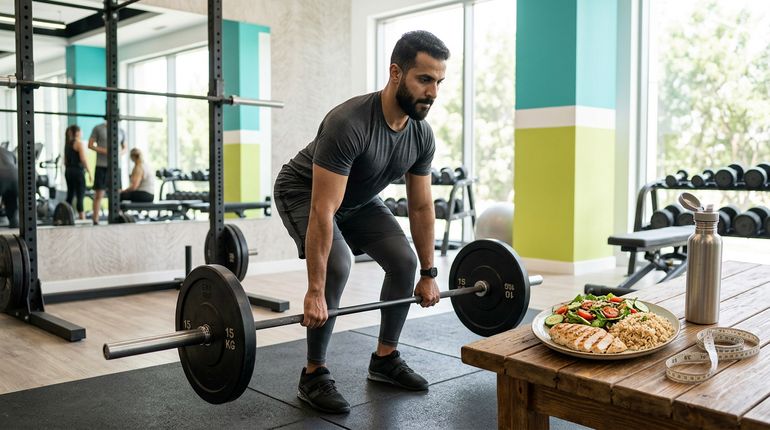
Excellent for the hamstrings and glutes. Hold a dumbbell in each hand in front of your thighs with your knees slightly bent, push your hips back and lower the weights close to your legs while keeping your back straight. Stop when you feel a stretch in the back of your thighs, then squeeze your glutes and stand tall. The movement comes from the hips, not from rounding the back.
3) Lunges
Take a long step forward and lower until the back knee approaches the floor, keeping your torso upright and the front knee over the ankle. Push through the front foot to return. If your balance is limited, start with static or split lunges, which build strength and correct differences between the two legs.
4) The hip thrust
Rest your upper back on a bench with your feet flat on the floor, then drive your hips up until your body forms a straight line from shoulder to knee, and squeeze your glutes for a second at the top. It is one of the best exercises for targeting the glutes directly, and it works at home with a dumbbell or a heavy bag.
5) Calf raises
Stand on the edge of a step and rise onto your toes as high as you can, then lower slowly until you feel a stretch in the calf. The calf is a stubborn muscle that responds well to higher reps, so aim for 12 to 20.
How many sets and reps do you need?
For a beginner, two to three sets per exercise of 8 to 12 reps is enough to start progressing. Choose a weight that leaves one or two reps in reserve on your last set, and rest from 90 seconds to three minutes between sets on heavy lifts. For more details, read our guide to rest between sets. The golden rule is gradual progression: add a rep or a small amount of weight each week, as we explain in our progressive overload guide.
Want a plan that fits your body and goal precisely?
With the Prof Health 30-Day Challenge, 3 specialists follow you across nutrition, fitness and mindset, so you build strength and lose excess fat with a plan built around you. Or book an online consultation to set your calories and protein.
Discover the 30-Day ChallengeBook your consultationA 4-week leg training plan
Train legs twice a week, for example Saturday and Wednesday, with at least one rest day between them.
- Week 1 (learn the technique): goblet squat, Romanian deadlift, static lunge, hip thrust, calf raise. Two sets of each, 10 to 12 reps with a light weight.
- Week 2 (add volume): three sets of each exercise with the same reps, adding a small amount of weight once your form is solid.
- Week 3 (add load): raise the weight by roughly 2.5 to 5 percent on the main lifts, and drop to 8 to 10 reps if needed.
- Week 4 (consolidate): hold the weights and improve movement quality and slow lowering, then review your progress and choose new targets for the next cycle.
Log your weights and reps in every session, because what is not measured is hard to improve.
Nutrition and recovery for stronger legs
Your large muscles need fuel and repair. Make protein a fixed part of every meal and check our guide to daily protein to find your number. A common range for people who train is about 1.6 to 2.2 grams per kilogram of body weight per day, and it varies with your situation. Do not neglect sleep, and read our sleep and muscle growth guide. If you feel muscle soreness in the two days after leg day, that is common, and the details are in our guide to muscle soreness. A simple Saudi-friendly post-workout idea is Greek yogurt with a few dates, or grilled chicken breast with rice and salad.
Common leg day mistakes
- Skipping the warm-up: five to ten minutes of light movement prepares the joints and reduces the risk of strains.
- Knees caving inward: always keep your knees in line with your toes.
- Rounding the lower back: reduce the weight and brace your abs.
- Going too heavy too soon: technique first, then load.
- Overtraining legs: more than three sessions a week for a beginner can get in the way of recovery.
Frequently Asked Questions About Leg Training
Can I train legs at home?
Yes. Bodyweight squats, lunges, hip thrusts with a heavy bag or a dumbbell, and calf raises are all effective at home. Make them harder with slower reps or a heavier load.
Will leg training make me bulky?
Not quickly. Building a lot of size takes years of training and eating for it, and most men and women simply notice stronger, more defined legs.
How often should I train legs each week?
Twice a week suits most beginners, with roughly 48 hours of rest between sessions.
Are squats bad for the knees?
Done with correct technique and a sensible load, squats are a safe exercise for most people and strengthen the muscles that support the knee. If you feel sharp pain, stop and consult a professional.
When should I see a doctor or a coach?
If you have a previous knee or back injury, a chronic condition, or feel sharp pain during exercise, consult your doctor or a certified trainer before you start.
Note:
This article is for health education and does not replace advice from your doctor, dietitian or certified trainer, especially if you have an injury, a health condition or take medication. Figures are approximate and vary from person to person.