Fasted Cardio: Does It Burn More Fat? Evidence & 4-Week Guide
Last updated: November 28, 2026
Short answer
Fasted cardio can make your body use a greater proportion of fat as fuel during that particular workout, but that is not the same as losing more body fat over weeks. Current evidence does not show a reliable fat-loss advantage over fed cardio when the overall plan is comparable. Choose the timing that helps you move consistently, feel well, and sustain your eating and recovery habits.
For many people in Riyadh, an early walk or easy jog feels practical before the day heats up. Others hear that exercising before breakfast is a shortcut to a leaner body. The useful answer is less dramatic: fasted cardio is one way to schedule a workout, not a special fat-loss method. This guide explains what the studies do and do not show, who may prefer it, when food is the better choice, and how to build a manageable four-week routine. If you want support shaping a plan around your schedule, you can also explore an online consultation.
What does fasted cardio mean?
Fasted cardio usually means doing aerobic exercise after an overnight period without food, often before breakfast. A person may wake, drink water, and take a walk, cycle, or easy jog before eating. There is no single clock-based definition that fits everyone: the last meal, sleep, workout time, and individual digestion all differ. In everyday fitness conversations, however, the phrase generally describes morning exercise before a meal.
It does not mean that the body has no available energy. During an overnight fast, the body continues to use stored fuels and maintains blood glucose through normal processes. Nor does “fasted” automatically mean “low intensity.” A gentle neighborhood walk and a demanding interval session can both happen before breakfast, although they do not feel the same and may not suit the same person.
It is also important not to confuse an overnight fast with Ramadan-style fasting. During Ramadan, the fasting window may include no food or fluids from dawn to sunset, and sleep and meal timing can change. That is a different context from waking after a night’s sleep, drinking water, and choosing whether to eat before a workout. Our separate Ramadan walking guide covers exercise timing during that month.
What does research say about fat burning?
The phrase “burns more fat” can describe two different things. During an individual workout, the body can draw a larger share of its energy from fat when exercise is done after an overnight fast, especially during easier aerobic activity. That is a short-term fuel-use measurement. It does not tell us, by itself, whether a person will lose more body fat after several weeks.
A systematic review and meta-analysis by Vieira and colleagues examined fasted versus fed aerobic exercise and markers of fat and carbohydrate use. Its findings support a difference in fuel use during exercise, not a promise of greater long-term body-fat loss. The body adjusts fuel use across the day. Appetite, meals later on, workout duration, daily movement, and recovery all influence the overall picture.
Longer-term comparisons are more relevant to a fat-loss goal. A review of overnight-fasted versus fed exercise interventions found no meaningful advantage for fasted training in changes to body mass, body-fat percentage, or lean mass across the small set of studies available. In a four-week randomized trial involving young women following a calorie-restricted diet, both groups changed body composition, but exercising before breakfast did not produce a greater reduction than exercising after eating. The study was useful, but its short duration and specific participants mean it should not be treated as proof about every adult or every routine.
Put simply, the scale of the whole day matters more than the fuel mix in one session. A sustainable energy deficit over time, adequate protein and nourishment, sleep, and regular activity matter more than whether a walk began before breakfast. Fasting does not cancel out a surplus later in the day, and eating a small snack does not cancel out a well-planned workout.
- During the session: fasted exercise may increase the proportion of energy coming from fat.
- Across the day: fuel use shifts as you eat, rest, and move.
- Across weeks: consistency and the overall eating and activity pattern are the useful targets.
For an easy-intensity approach, see our guide to Zone 2 cardio and the talk test. It explains how to keep a session conversational rather than turning every morning into a hard effort.
Who may like it, and who should pause first?
It can suit a healthy adult who enjoys an easy or moderate workout before breakfast and feels well doing it. Its practical advantage is convenience, not a special fat-loss effect. There is no need to force it if eating first feels better.
- If you have diabetes and use insulin or glucose-lowering medication, ask your clinician how to coordinate food, medicine and exercise.
- If you are pregnant, have a history of low blood sugar or fainting, or manage a health condition, get individual medical guidance before changing your routine.
- If you feel shaky, weak, dizzy, nauseated or close to fainting, stop and move somewhere safe; do not push through symptoms.
- If skipping food affects your mood, recovery or eating habits, choose a fed workout instead.
Performance trade-offs: easy movement versus hard training
A short walk may feel fine before breakfast, while a long run or intervals may feel harder for some people. For demanding sessions, a familiar snack or breakfast can support comfort and effort. Notice energy and pace over several workouts; if fasted sessions repeatedly feel worse, eat first. Our before-and-after workout food guide has more ideas.
A practical Riyadh-friendly morning routine
In warmer months, try outdoor movement near sunrise; if mornings do not work, choose an indoor treadmill, a shaded cooler-time route, or a walk after Isha. Avoid the hottest hours and adjust to local conditions.
- Before: drink water to thirst, bring a bottle, and wear light clothing.
- Warm up: walk easily for five minutes, then keep a pace where you can speak in full sentences.
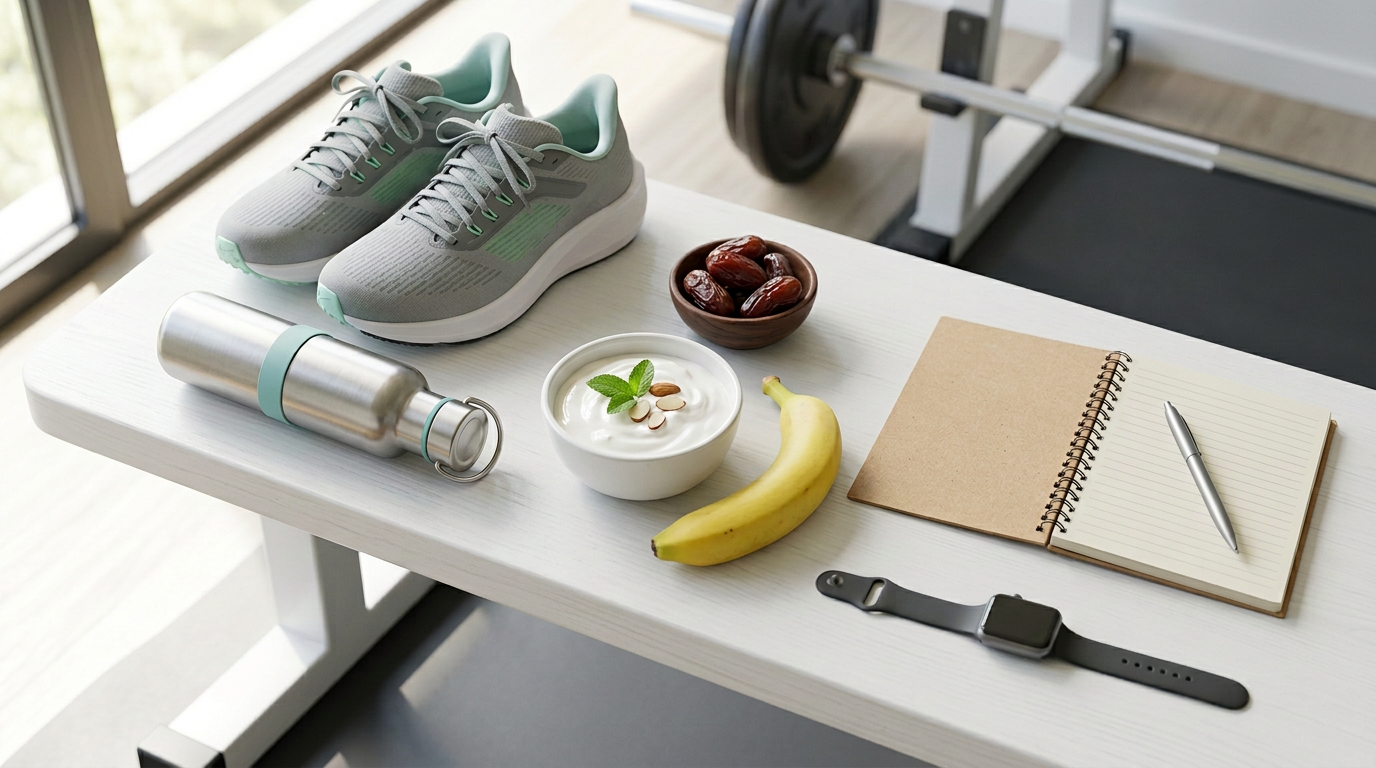
- Food is optional: if you want something, try a banana, one or two dates, a little yoghurt, or familiar coffee. Choose what sits comfortably.
- During: drink as needed. Water is generally enough for a short easy session; electrolytes may suit longer, sweatier exercise but do not burn fat.
- After: eat a normal meal with protein and carbohydrates when it fits your day.
A realistic four-week plan
For generally healthy adults comfortable with light activity, choose fasted or fed sessions by preference. Keep the pace conversational, use an indoor option in uncomfortable weather, and repeat a week if needed. Get individual advice if you have a health concern or are unsure about starting.
| Week | Sessions | Time and effort | Focus |
|---|---|---|---|
| 1 | 3 walks | 15–20 min, easy | Find a safe time; notice comfort. |
| 2 | 3 sessions | 20–25 min, easy-moderate | Add time only if recovery is good. |
| 3 | 3 sessions | 25–30 min, conversational | Optional gentle faster intervals. |
| 4 | 3–4 sessions | 25–35 min, mostly easy | Repeat what worked; set a next goal. |
Log time, energy and whether you ate. Stop and reassess if pain, unusual fatigue or dizziness appears; this plan is for consistency, not a promised scale change.
Common fasted-cardio mistakes
- Assuming more fat used in a workout means more fat lost later. These are different measurements; long-term habits and energy balance still matter.
- Starting too hard. An empty stomach does not make an intense session more effective. Build time and effort gradually.
- Ignoring thirst or heat. Riyadh’s weather can change what feels manageable. Carry water, shift to indoors, or reschedule when conditions are uncomfortable.
- Refusing food despite feeling unwell. Stop, recover, and eat or drink as appropriate; do not treat dizziness as proof that the workout is working.
- Compensating with restrictive eating. Cardio does not require skipping meals or “earning” food. Regular nourishment supports everyday life and training.
- Expecting a dramatic result in four weeks. Use this plan to establish consistency, not as a promise of a particular change on the scale.
Want a plan that fits your day and your goals?
The 30-Day Challenge brings nutrition, fitness and mindset support together, or you can book an online consultation to discuss a practical approach to movement and nutrition that suits your routine.
Discover the 30-Day ChallengeBook your consultationFrequently Asked Questions About Fasted Cardio
Does fasted cardio burn more body fat?
It can increase the share of fat used as fuel during a workout, but that does not establish greater body-fat loss over time. Reviews of available training studies have not found a dependable advantage for fasted exercise over fed exercise when considering longer-term body-composition change.
Should I eat before a morning walk?
Either choice can work for an easy walk if you feel well. Try water first and pay attention to comfort. If you feel weak, hungry, or distracted, have something familiar such as a banana, dates, yoghurt, or a small breakfast instead.
Is fasted cardio safe for everyone?
No routine is right for every person. People using glucose-lowering medication, those with a history of low blood sugar or fainting, and people who are pregnant or managing a health condition should discuss the plan with a clinician. Stop if you feel dizzy or unwell.
Can I do fasted HIIT or a long run?
You may find hard or long sessions more difficult without food, and there is no need to choose fasted training for a fat-loss goal. If performance and comfort matter, try eating beforehand and compare how the session feels. Keep any faster work controlled and build gradually.
Is exercising during Ramadan the same as fasted cardio?
No. Overnight fasted cardio usually follows sleep and allows water before or during exercise. Ramadan fasting may involve avoiding both food and fluids during daylight, so timing, hydration and recovery are different. Use guidance intended for Ramadan rather than treating the two situations as interchangeable.
Note:
This article is for general health education and is not medical advice. It does not replace guidance from your doctor or qualified health professional, especially if you are pregnant, take medication, have a health condition, or experience symptoms during exercise.
Sources
- Vieira et al., Effects of aerobic exercise performed in fasted v. fed state on fat and carbohydrate metabolism in adults: a systematic review and meta-analysis, British Journal of Nutrition.
- Hackett and Hagstrom, Effect of Overnight Fasted Exercise on Weight Loss and Body Composition: A Systematic Review and Meta-Analysis, Journal of Functional Morphology and Kinesiology.
- Is exercise best served on an empty stomach? Proceedings of the Nutrition Society.