Protein While Dieting: How to Keep Your Muscle While Losing Weight, and Where Supplements Fit
You have cut calories, the scale is finally moving, and yet something feels off: you are weaker in the gym, you look softer rather than leaner, and you are hungry all the time. This is a very common story, and often the missing piece is protein. When you eat less, your body does not only burn fat. It can also break down muscle, and the less protein you eat, the more of that weight loss can come from lean tissue. The practical takeaway: the goal is not just to weigh less, it is to lose fat and keep muscle. In this guide from Prof Health we explain how much protein to aim for during weight loss, how to get it from familiar Saudi foods, where protein supplements genuinely help, how to choose a safe product, and who should check with a doctor first.
Why muscle matters when you are losing weight
Muscle is more than appearance. It supports strength, balance, posture, blood-sugar control and your ability to stay active as you age. A review published in Advances in Nutrition notes that weight loss achieved through a reduced-calorie diet lowers muscle mass as well as fat, and that a hypocaloric diet with adequate protein, together with resistance exercise, helps maintain muscle. Another systematic review of adults with overweight or obesity found that higher protein intake significantly reduced the decline in muscle mass during weight loss. At the same time, researchers are careful to say that more protein does not automatically mean more strength, so it works best as one part of a plan that also includes training and sleep.
In daily life, protecting muscle means a better body composition at the end of your diet, a metabolism that is less likely to slow down more than necessary, and an easier time keeping the weight off afterwards. It also means you are more likely to feel energetic enough to stay consistent, which is the real secret of any successful plan.
How much protein do you actually need?
The general recommended allowance for adults is about 0.8 grams per kilogram of body weight per day, and this is designed to prevent deficiency, not to protect muscle during a calorie deficit. Studies on people who are dieting often use higher intakes: one systematic review describes 1.2 to 1.6 grams per kilogram per day as a range that helped preserve lean mass compared with the normal intake, while sports-nutrition reviews suggest athletes who are cutting may aim for roughly 1.6 to 2.4 grams per kilogram. For most healthy adults who are dieting and training moderately, a sensible working range is 1.2 to 1.6 grams per kilogram of body weight per day, adjusted by your doctor or dietitian if you have a medical condition.
| Your weight | 1.2 g/kg per day | 1.6 g/kg per day |
|---|---|---|
| 60 kg | 72 g | 96 g |
| 70 kg | 84 g | 112 g |
| 80 kg | 96 g | 128 g |
| 90 kg | 108 g | 144 g |
| 100 kg | 120 g | 160 g |
If you have a lot of weight to lose, many dietitians calculate protein from a healthy goal weight instead of your current weight so the target does not become unrealistically high. Treat these numbers as a starting point, track how you feel and how you perform for two to three weeks, and adjust. More is not always better: beyond roughly 1.6 grams per kilogram, most people see little extra benefit for keeping muscle, and you still need room in your calories for vegetables, fibre and healthy fats.

Food first: easy protein in Saudi meals
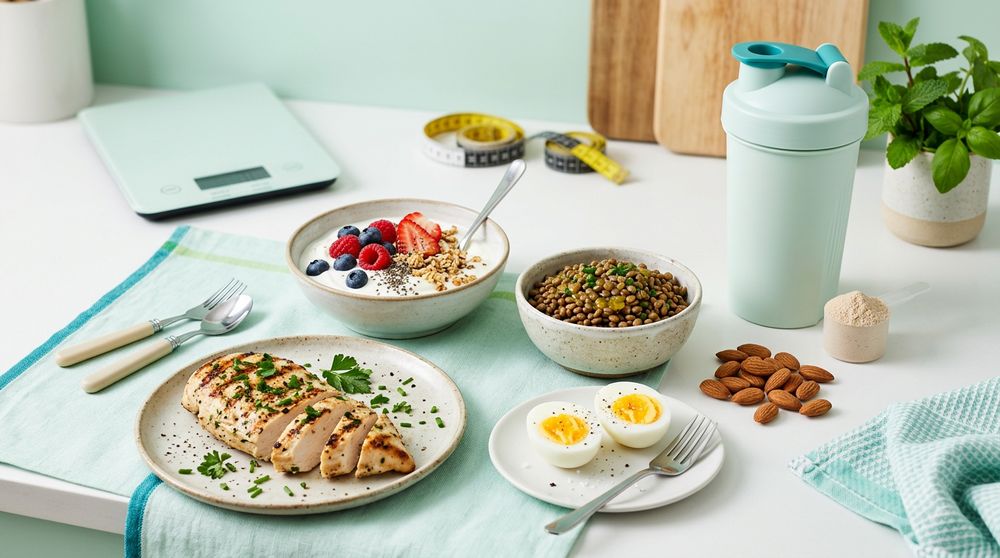
Before reaching for a tub of powder, look at your plate. Most people can cover the majority of their target from ordinary food, and whole foods bring fibre, vitamins and minerals that a shake does not. The values below are approximate and vary by brand and cooking method, so check the label on packaged items.
| Food | Typical portion | Approx. protein |
|---|---|---|
| Grilled chicken breast | 100 g cooked | about 30 g |
| Lean beef or lamb | 100 g cooked | about 26 g |
| Tuna in water, drained | 1 small can (about 100 g) | about 22 to 25 g |
| Eggs | 2 large | about 12 g |
| Plain Greek yogurt | 200 g | about 18 to 20 g |
| Cottage cheese | 100 g | about 11 g |
| Cooked lentils | 1 cup (about 200 g) | about 18 g |
| Cooked fava beans (foul) | 1 cup (about 170 g) | about 13 g |
| Almonds | 30 g (a small handful) | about 6 g |
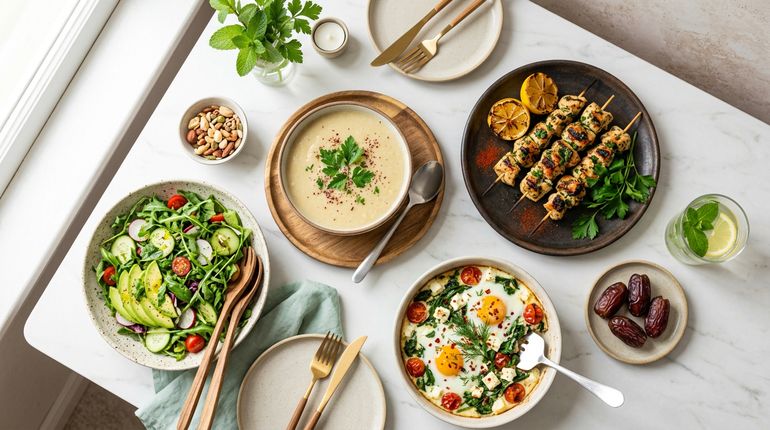
Notice how quickly it adds up: eggs and yogurt at breakfast, chicken or fish with lentil soup at lunch, tuna or cottage cheese as a snack, and grilled meat with salad at dinner can reach 110 to 130 grams without any powder at all.
Spread it across the day
Your body uses protein best when it arrives in several moderate doses rather than one huge dinner. A helpful rule is to aim for roughly 25 to 40 grams at each of three main meals, plus a protein-rich snack if needed. People often under-eat protein at breakfast, which is why a Saudi breakfast of bread and tea can leave you hungry by mid-morning. Swapping in eggs, foul with an egg, or yogurt with nuts changes the whole day.
A sample 1,600-calorie day with about 115 g protein
- Breakfast: 2 eggs, a slice of whole-grain bread, cucumber and tomato, and a small cup of Greek yogurt (about 30 g protein).
- Lunch: 120 g grilled chicken, a cup of lentil soup with lemon, and a large salad (about 45 g).
- Snack: 100 g cottage cheese with a few almonds, or a protein shake if you are short on time (about 20 g).
- Dinner: 120 g grilled fish or lean meat with roasted vegetables and a small portion of rice or sweet potato (about 30 g).
Where do protein supplements fit?
A protein supplement is a convenience, not a requirement. It can help when your appetite is low, when you are busy, when you train and need a quick option, or when you struggle to reach your target from food, for example if you eat few animal products. One scoop typically provides around 20 to 25 grams of protein for roughly 100 to 130 calories, but this varies widely by brand, so read the label. Whey is quickly digested and popular after training, casein digests more slowly and some people prefer it in the evening, and plant blends such as pea and rice suit people who avoid dairy. We compare them in detail in our guide to whey, plant and casein protein.
Supplements are not magic, and they do not replace meals. A shake that is blended with sugary syrups, full-fat milk, ice cream or large amounts of nut butter can turn a 120-calorie scoop into a 500-calorie dessert. If your goal is weight loss, mix the powder with water or low-fat milk, and count the shake as part of your daily calories.
A 7-point check before you buy
- Look for local registration. Check that the product is registered with the Saudi Food and Drug Authority and sold by a trusted seller.
- Prefer third-party testing. Independent certification suggests the contents match the label and have been screened for contaminants.
- Check protein per serving. Aim for roughly 20 grams or more per scoop with a short ingredient list.
- Watch the sugar and calories. Flavoured products can hide added sugar and fats.
- Avoid proprietary blends that do not state the amount of each ingredient.
- Check allergens such as milk, soy, nuts and gluten.
- Be wary of miracle claims such as ‘burn fat while you sleep’. If it sounds too good to be true, it is.
We explain each step in more depth in our 7-step protein safety check, and we separate fact from fiction in 8 protein and supplement myths checked against the evidence.
Protein alone will not protect muscle: add resistance training
Protein tells your body that building and keeping muscle is worthwhile, but resistance exercise gives it the reason. Research on weight loss consistently points to the combination of adequate protein and strength training as the most effective way to protect lean mass. You do not need a perfect programme. Two to three full-body sessions per week using squats, rows, presses, lunges and carries, at a challenging but safe weight, is enough to start. Add daily walking for general health, and aim for seven to nine hours of sleep, because poor sleep makes recovery and appetite control harder.
How fast should you lose weight?
A slower, steadier pace usually protects more muscle than a crash diet. A common guideline is to aim for about 0.5 to 1 percent of body weight per week. Very rapid weight loss is more likely to take lean tissue with it, and it is harder to sustain. If your strength drops sharply, you feel dizzy or constantly exhausted, or your hair and mood suffer, your deficit is probably too aggressive. Eat a little more, rest, and speak to a professional.
Common mistakes to avoid
- Skipping protein at breakfast and trying to catch up at night.
- Relying on shakes for every meal and missing out on fibre and micronutrients.
- Ignoring calories: protein helps, but a calorie deficit is still what drives fat loss.
- Stacking many products such as BCAAs, fat burners and pre-workouts without a clear reason.
- Buying on hype without checking registration, testing and the label.
- Forgetting water and fibre: a higher-protein diet works best with plenty of vegetables, fluids and whole grains.
Who should check with a doctor first?
A higher-protein diet is generally considered safe for healthy adults, but it is not right for everyone. Speak to your doctor or a registered dietitian before changing your protein intake or starting any supplement if you have kidney disease, liver disease, or a metabolic condition, if you are pregnant or breastfeeding, if you take regular medication, if you are under 18, or if you have a history of disordered eating. Do not use a supplement to replace a diagnosed treatment.
Quick answers
- Can I lose weight without protein powder? Yes. Powder is optional. Food can meet your needs if you plan your meals.
- Does protein harm healthy kidneys? Current evidence does not show harm to healthy kidneys at typical high-protein intakes, but anyone with kidney disease must follow medical advice.
- Will protein make women bulky? No. Building large muscles takes years of heavy training and a calorie surplus.
- Is it okay to have a shake before bed? Yes, if it fits your daily calories and you tolerate it well.
- How soon will I see results? Most people notice better fullness within days and better body composition over weeks, as strength holds steady while the scale drops.
Start your plan with Prof Health
Want to know exactly how much protein suits your body, your goal and your daily routine, and which supplement, if any, is worth it? Join the 30-Day Challenge by Prof Health, where specialists follow you in nutrition, fitness and mental wellbeing, or book a personalised nutrition consultation with The Professor over Zoom to get a clear plan built around your weight, tests and lifestyle.
This article is for general education and does not replace advice from your doctor or a registered dietitian.
Sources
- Preserving Healthy Muscle during Weight Loss (Advances in Nutrition, PMC) – weight-loss-related muscle loss, protein and resistance exercise.
- Enhanced protein intake on maintaining muscle mass, strength and physical function in adults with overweight/obesity: a systematic review and meta-analysis (ScienceDirect) – protein intake ranges and muscle preservation during weight loss.
- Protein Recommendations for Weight Loss in Elite Athletes (International Journal of Sport Nutrition and Exercise Metabolism) – protein ranges, distribution and training during an energy deficit.