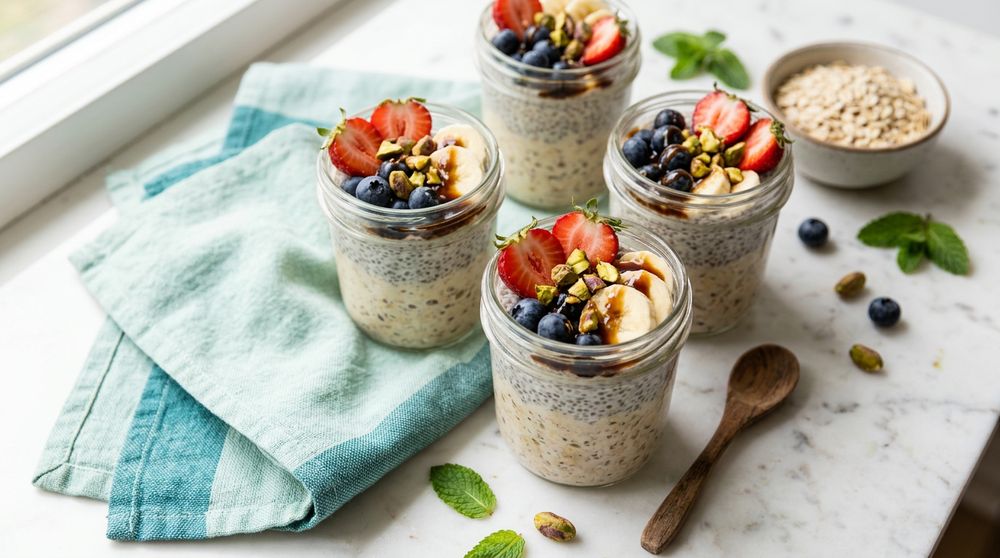
Overnight Oats and Chia Pudding: 5 Make-Ahead Recipes That Support Weight Loss and Keep You Full Until Noon
Last updated: November 29, 2026
Quick summary
Overnight oats and chia pudding are a ready-to-eat breakfast that you prepare in five minutes the night before. Follow a simple formula: 30 to 40 grams of oats, 100 to 150 grams of yogurt or another protein source, one teaspoon to one tablespoon of chia seeds and 80 to 100 grams of fruit. You get a breakfast of roughly 300 to 380 calories with 15 to 30 grams of protein that keeps you full for hours and reduces the urge to grab something ready-made.
Busy mornings are the number one enemy of any diet: you wake up late, stop at a bakery or order a ready breakfast with calories you cannot count. The easiest fix is not willpower but preparation. In this guide we explain why overnight oats and chia pudding suit anyone trying to lose weight, give you a formula to build any jar yourself, then five recipes with clear quantities and approximate calories, a weekly plan that fits the Saudi work week from Sunday to Thursday, and finally common mistakes and answers to your questions.

Why oats and chia suit weight loss
Weight loss needs a moderate calorie deficit and enough fullness to keep you consistent. This type of breakfast helps for three reasons:
- Soluble fiber. Oats contain beta-glucan, and chia seeds provide roughly 10 grams of fiber per 28 grams. These fibers absorb liquid and form a gel that slows digestion and prolongs the feeling of fullness.
- Easy to raise the protein. Adding yogurt, milk or a protein powder lifts the protein in your breakfast. Protein is among the most filling nutrients and helps protect muscle while you lose fat.
- Full control of sugar and calories. When you prepare the jar yourself you know every spoonful, unlike ready-made cups that can carry added sugar, cream and more than 450 calories.
Remember that the calories below are approximate and change with the brand and the type of milk and yogurt, and that real needs differ from person to person.
The winning jar formula: five parts
- The base (30 to 40 grams of oats). Choose whole rolled oats, not sweetened instant oats, because they keep their texture overnight.
- The protein (100 to 150 grams). Greek yogurt, plain low-fat yogurt or laban, or half to one full scoop of protein powder.
- The liquid (100 to 200 ml). Skim milk or unsweetened almond milk. Less liquid gives a thick, pudding-like texture.
- Fiber and healthy fats (5 to 25 grams). Chia seeds or ground flax, with 10 grams of nuts for crunch.
- Fruit and flavor (80 to 100 grams). Berries, apple or mango, and flavor from cinnamon, cardamom or vanilla instead of sugar. If you need extra sweetness, one date is enough.
5 overnight oats and chia recipes with quantities
1) Berry and yogurt oats (about 330 calories, 16 g protein)
Ingredients: 40 g oats, 120 g plain low-fat yogurt, 100 ml skim milk, 5 g chia seeds (one teaspoon), 80 g mixed berries, a pinch of vanilla.
Method: Mix the oats, yogurt, milk, chia and vanilla in a glass jar and stir well. Fold in half of the berries, top with the rest, close the jar and chill for at least 6 hours.
2) Chocolate banana protein oats (about 345 calories, 30 g protein)
Ingredients: 30 g oats, 150 ml skim milk, 25 g chocolate protein powder, one teaspoon unsweetened cocoa, 50 g mashed banana, 5 g chia.
Method: Whisk the protein powder and cocoa into the milk until smooth so there are no lumps, then add the oats, chia and mashed banana, stir and refrigerate overnight. This is the best choice for people who train in the morning.
3) Mango coconut chia pudding (about 300 calories, 15 g protein)
Ingredients: 25 g chia seeds (two tablespoons), 200 ml unsweetened almond milk, 100 g chopped mango, 100 g fat-free Greek yogurt, 5 g unsweetened shredded coconut.
Method: Stir the chia into the almond milk, leave for 10 minutes, stir again to prevent clumping and chill for at least 4 hours. In the morning top with the yogurt, then the mango and coconut. It has no oats, so it suits anyone who prefers a lighter texture.
4) Date and cardamom oats (about 380 calories, 17 g protein)
Ingredients: 40 g oats, 150 ml skim milk, 100 g plain low-fat yogurt, one pitted date (about 20 g) chopped, 10 g sliced almonds, a quarter teaspoon ground cardamom.
Method: Mix the oats, milk, yogurt and cardamom, stir the chopped date into the mixture so it sweetens naturally, and add the almonds at serving time so they stay crunchy. An authentic Saudi flavor with moderate sweetness.
5) Apple cinnamon walnut oats (about 380 calories, 16 g protein)
Ingredients: 40 g oats, 100 ml skim milk, 100 g plain low-fat yogurt, 80 g grated apple with the skin, half a teaspoon cinnamon, 10 g crushed walnuts, 5 g chia.
Method: Combine everything except the walnuts, stir in the grated apple, and add the walnuts when you eat. It tastes like apple pie with far less sugar.
Want a breakfast and calorie plan built for your body?
With the 30-day Prof Health Challenge, 3 specialists in nutrition, fitness and mindset follow you, or book an online nutrition consultation with the Professor to set your calories, protein and meals precisely.
Discover the 30-day challengeBook your consultation nowThe weekly make-ahead plan, Sunday to Thursday
- Saturday evening (15 minutes): prepare three jars for Sunday, Monday and Tuesday: berry, then date and cardamom, then chocolate banana. Add the crunchy toppings and soft fruit each morning.
- Tuesday evening (10 minutes): prepare two jars for Wednesday and Thursday: mango chia, then apple cinnamon.
- In the morning: take the jar out, add the crunchy toppings and take it to work if needed. The weekly total is about 1,700 calories for five breakfasts, an average of 340 calories per breakfast.
- With breakfast: a glass of water or black coffee. If protein is your priority, pick jar number two on training days.
6 mistakes that ruin overnight oats
- Adding honey and sugar generously. One tablespoon of honey adds about 60 calories. Replace it with cinnamon or mashed fruit.
- Relying on flavored instant oats. They carry added sugar and turn very mushy.
- Forgetting protein. A jar of only oats and fruit raises blood sugar and is followed by early hunger.
- Overdoing nuts and peanut butter. They are healthy but calorie-dense: 10 grams is enough, and one full tablespoon of peanut butter can add roughly 95 calories.
- Not stirring the chia. The seeds clump at the bottom if you do not stir the mixture after 10 minutes.
- Drinking too little water. Fiber needs enough fluid, so drink water through the day to digest comfortably without bloating.
Storage and food safety in Riyadh's heat
Keep the jars in the fridge at 5 degrees Celsius or below, in tightly closed jars, and eat them within three days at most. Do not leave a jar in the car or on a warm desk for long, and if you take it to work carry it in a cooler bag with an ice pack. Add soft fruit such as banana and mango in the morning for better texture, and do not freeze a jar that has a lot of yogurt because the texture changes after thawing. Anyone with gluten sensitivity should choose oats labeled gluten-free.
Frequently asked questions
Do I always have to eat overnight oats cold? No. If you prefer them warm, heat them in the microwave for 60 to 90 seconds before adding soft fruit.
Do oats make you gain weight? Not by themselves. What raises weight is a surplus of total calories. A portion of 30 to 40 grams with protein and fiber fits comfortably into a calorie-deficit plan.
How much chia should I use daily? From one teaspoon to two tablespoons is enough for most people. Start small and increase gradually while drinking water so your digestive system adapts.
Is it suitable for people with diabetes? It may be, with measured portions and no added sugar, but it is best to ask your doctor or dietitian to adjust the carbohydrates for your condition.
What if I get bored of the taste? Change the flavor and fruit weekly: fresh figs, pomegranate, grated orange zest or a teaspoon of rose water.
Read also
- Fiber and gut health: feel fuller, digest better and support your weight
- Healthy sandwiches and wraps for weight loss
- Light dinner recipes for weight loss: 5 dishes under 450 calories
The information in this article is for general education and does not replace advice from your doctor or dietitian, especially if you have a chronic condition, are pregnant or breastfeeding, or have a food allergy.