Fiber and Gut Health: How to Feel Fuller, Digest Better and Support Your Weight — A Practical Guide with a 7-Day Plan
Last updated: November 28, 2026
Many people hunt for a magic supplement to improve digestion or lose weight, yet the closest solution is already in the kitchen: fiber. It adds few calories, but it slows digestion, increases the volume of your meals and feeds the friendly bacteria in your gut. The problem is that most people fall short of the amount they need, especially with plenty of white rice, refined bread and fast food on the table. In this guide we explain in plain language how fiber works, how much you need and how to increase it without bloating. And if you would like a plan built around your body and goals, take a look at Prof Health's personalized diet plan.

What is fiber and why does it matter for your body?
Fiber is the part of plant foods that your body cannot fully digest. Instead of being absorbed, it travels through your digestive system and does several useful jobs along the way, which is why it is one of the key parts of a balanced diet.
- It increases fullness: Some fibers absorb water and turn into a gel that slows stomach emptying, so you feel full for longer and are less tempted to snack between meals.
- It regulates bowel movements: It adds bulk and makes stool easier to pass, which eases constipation for many people.
- It feeds friendly bacteria: Certain fibers act as food for the good bacteria in your colon, which in turn produce short-chain fatty acids that support the gut lining.
- It supports steadier blood sugar: Slower carbohydrate absorption means a calmer rise in blood sugar after a meal, which helps if you watch your energy and appetite.
- It supports your heart: A diet rich in legumes, whole grains and vegetables is linked to better heart and blood vessel health.
The World Health Organization's healthy diet guidance recommends at least 400 grams of fruit and vegetables a day, along with plenty of legumes, nuts and whole grains, all of which are rich in fiber.
How much fiber do you need each day?
Common recommendations for adults range from about 25 to 30 grams a day, and the right figure can vary with age, sex, calorie needs and health conditions. In reality, many people eat clearly less than that. Before you count anything, remember three simple rules:
- Start where you are: If you eat 10 grams now, do not jump to 30 in a single day. Add 3 to 5 grams every few days.
- Food before supplements: Whole foods give you fiber together with vitamins, minerals and plant compounds that pills and powders do not.
- Water is fiber's partner: Without enough fluids, fiber can make constipation worse instead of better, so raise your water intake at the same time.
Soluble and insoluble fiber: what is the difference?
You do not need to memorize the scientific classification, but knowing the difference helps you vary your plate wisely. Most plant foods contain both types in different proportions.
| Type | What it does | Examples |
|---|---|---|
| Soluble | Forms a gel, increases fullness and softens blood sugar spikes | Oats, chia, lentils, apples, chickpeas |
| Insoluble | Adds bulk and speeds up passage | Whole grains, leafy greens, fruit skins, nuts |
Fiber sources on the Saudi table
You do not need exotic or expensive foods. Most of the sources below are available in any supermarket and fit our everyday dishes. The figures are approximate and vary with the variety and the way you cook.
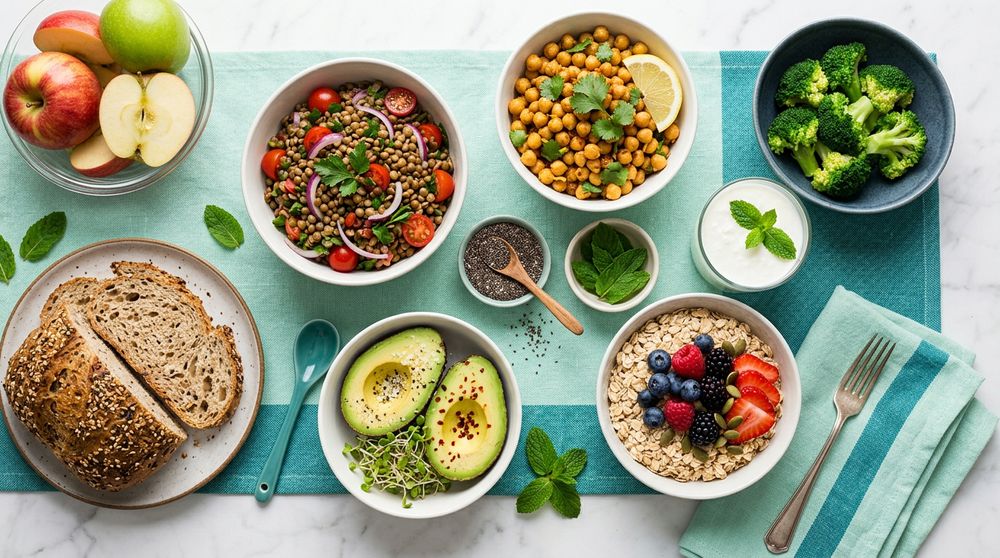
- Cooked lentils (1 cup): about 15 grams. Add them to soup or serve them as a side in place of part of the rice.
- Cooked chickpeas (half a cup): about 6 grams. Great in salads or as hummus with olive oil.
- Oats (half a cup, dry): about 4 grams. Make breakfast with milk or yogurt and berries.
- Avocado (half): about 6 grams, plus healthy fats that boost fullness.
- Apple with skin (medium): about 4 grams.
- Cooked broccoli (1 cup): about 5 grams.
- Chia seeds (1 tablespoon): about 4 grams. Soak them first so they form a gel.
- Dates (3): about 4 grams, but they are calorie-dense, so watch the portion.
- Whole wheat bread (1 slice): about 2 to 3 grams, a better pick than white bread.

Fermented foods and probiotics: do you really need them?
Fermented foods such as yogurt, laban, kefir and naturally fermented pickles contain live microorganisms that may support gut balance in some people. Results differ from person to person, though, and not everything sold as a probiotic is useful or proven. A practical rule is to combine both sides: fiber that feeds the bacteria, and fermented foods that supply live cultures. Plain yogurt with oats, a spoon of chia and a handful of berries is a simple breakfast that does both. Choose plain, unsweetened yogurt to avoid added sugar, and treat pickles with care because they can be high in salt.
A 7-day plan to raise fiber without bloating
A sudden jump is the number one cause of gas and bloating. So follow a gentle ramp-up and adjust it to how your body feels.
| Day | Step |
|---|---|
| 1 | Log one normal day of eating and estimate your fiber. Then add one piece of fruit with its skin. |
| 2 | Swap white bread for whole wheat in one meal and add an extra glass of water. |
| 3 | Add a salad or cooked vegetables to lunch. |
| 4 | Bring in half a cup of cooked lentils or chickpeas, and soak a spoon of chia for the morning. |
| 5 | Make breakfast oats with plain yogurt and berries or apple. |
| 6 | Walk 10 to 15 minutes after lunch and notice your digestion and fullness. |
| 7 | Review the week: which foods felt good? Keep them and continue adding small steps. |
Common mistakes when increasing fiber
- Jumping too fast: Doubling fiber in one day causes gas and cramps, so people quit before they benefit.
- Ignoring water: Fiber needs fluids to do its job, and too little water can make constipation worse.
- Trusting every 'high fiber' label: Some biscuits and bars add fiber but also carry plenty of sugar and fat. Read the nutrition label.
- Always peeling fruit and vegetables: The skin is an important source of fiber, so wash it well and eat it when you can.
- Relying on a single type: Rotating legumes, grains, vegetables and fruit feeds a wider range of bacteria.
- Forgetting sleep and movement: Your gut responds to poor sleep, stress and inactivity, and fiber alone is not enough.
Daily habits that support digestion and your overall health
Fiber is only part of the picture. To feel a real difference, pair it with small, steady habits: chew your food slowly, eat meals at regular times, sip water throughout the day instead of all at once, move after big meals and aim for at least seven hours of sleep. In Riyadh's hot days, remember to drink more because dehydration amplifies the effect of low fiber. And remember that your body adapts in about two weeks, so do not judge the result from day one.
Who should be careful?
If you have irritable bowel syndrome, inflammatory bowel disease, a bowel narrowing, celiac disease or any chronic digestive condition, your fiber plan may need special adjustment, so talk to your doctor or dietitian before making big changes. If you take medication, fiber can affect the timing of absorption, so ask your doctor. And if you notice blood in the stool, severe pain, unexplained weight loss or persistent constipation, these are signs that call for a medical visit, not just a change in diet.
Want a nutrition plan that fits your body and digestion?
The Prof Health team helps you build a clear plan that raises fiber step by step, tracks your progress and adjusts it to your comfort and goals, 100% online.
Book a nutrition consultation on Zoom Explore the personalized diet plan
Frequently asked questions
Does fiber help with weight loss?
It does not burn fat by itself, but it increases fullness and reduces random eating, which makes a moderate calorie deficit easier to stick to.
Why do I feel bloated when I increase fiber?
Because gut bacteria ferment fiber and produce gas. Raising it gradually, drinking water and cooking legumes thoroughly reduce the problem.
Are fiber supplements a substitute for food?
They may help in some cases under medical guidance, but whole food is better because it provides nutrients that powders lack.
Is a probiotic necessary every day?
Not for everyone. Plain yogurt and fermented foods within a varied diet are enough for most healthy people.
How much water do I need with fiber?
It depends on your weight, activity and weather, but pale-colored urine through the day is a simple sign you are drinking enough.
Health note: This content is educational and does not replace a doctor's advice. Do not stop a medication or change its dose without consulting your doctor, and every person's results differ.
References
- Healthy diet — World Health Organization (WHO) — https://www.who.int/news-room/fact-sheets/detail/healthy-diet