Healthy Cooking Methods: How Grilling, Boiling, Steaming and Air Frying Change the Calories and Nutrition of Your Food
Last updated: November 27, 2026
When we talk about a healthy diet, we usually talk about what is on the plate. We talk far less about how it was cooked. Yet the cooking method decides how much fat is added, how many vitamins survive, and even how well your body absorbs certain nutrients. This guide explains the main methods in simple terms so you can make small changes that fit a busy Saudi kitchen, without giving up taste.
Why the cooking method matters
Three things change when food meets heat. First, calories: a single tablespoon of oil adds about 120 calories, and food that soaks up oil in a pan or fryer can double its energy without looking any bigger. Second, nutrients: vitamin C and several B vitamins dissolve in water and are sensitive to heat, so long boiling in plenty of water can wash a share of them away. Third, by-products: very high, direct heat on meat can create charred spots that are best limited.
The goal is not perfection. The goal is to pick the method that suits the food, keep added fat under control, and stop cooking when the food is ready rather than overdone.
A quick comparison of the main methods
| Method | Best for | Watch out for |
|---|---|---|
| Steaming | Vegetables, fish, dumplings | Bland taste if unseasoned |
| Baking and roasting | Chicken, salmon, potatoes, vegetables | Too much oil on the tray |
| Grilling | Lean meat, chicken, fish, kebab | Charred edges and flare-ups |
| Air frying | Crispy chicken, falafel, fries | Overcooking and dryness |
| Boiling | Eggs, legumes, grains, soups | Vitamins lost into the water |
| Deep frying | Occasional treats only | High calories and reused oil |
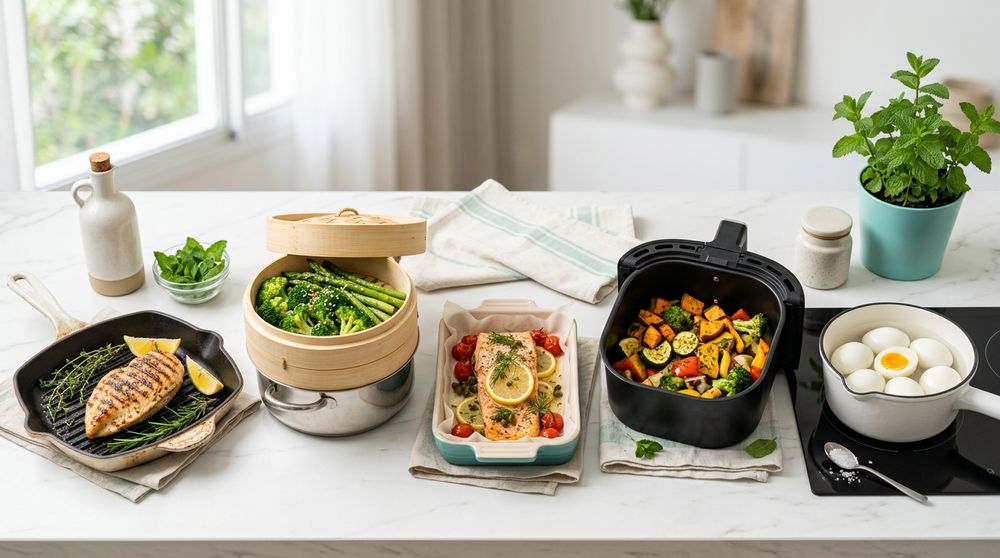
1) Steaming: the gentlest method
Steaming cooks food above boiling water instead of in it, so fewer vitamins leak out and no fat is needed. It suits broccoli, zucchini, carrots, green beans and white fish. Cook vegetables for four to seven minutes until they are bright and just tender. Finish with lemon, garlic, black pepper or a teaspoon of olive oil to add flavor. If you do not own a steamer, a lidded pot with a metal colander works well.
2) Baking and roasting: easy and hands-off
The oven is the simplest way to cook for the whole week. Chicken breast, salmon, sweet potato and mixed vegetables all do well at 180 to 200 degrees Celsius. Use baking paper and brush the food lightly rather than pouring oil over the tray. A good rule is one teaspoon of oil per portion, which is about 40 calories instead of 120 or more. Roast vegetables in a single layer so they brown instead of steaming in their own juices.
3) Grilling: great flavor, with a few rules
Grilling suits lean cuts and keeps the extra fat dripping away. To enjoy it more safely, marinate meat with lemon juice, yogurt, garlic and herbs for at least thirty minutes, since marinades with acid and herbs may reduce charring. Cook over medium heat rather than a roaring flame, turn the food often, and trim any blackened parts instead of eating them. Pair grilled meat with a large salad or grilled vegetables so that the plate stays balanced.
4) Air frying: crunch with much less oil
An air fryer circulates hot air around the food, so you can get a crisp result with a teaspoon of oil instead of a deep pan. Homemade potato wedges, chicken strips and falafel-style patties are the classic examples. Do not overfill the basket, shake it halfway through, and check a few minutes early, because small portions dry out quickly. Remember that it is still food: a large bowl of air-fried potatoes is still a large bowl of potatoes.
5) Boiling: smart for some foods, not for others
Boiling is ideal for eggs, lentils, chickpeas, rice and pasta, and it adds no fat. The downside appears with vegetables: some water-soluble vitamins move into the cooking water. If you boil vegetables, use a small amount of water, keep the time short, and reuse the liquid in soup or sauce so you do not pour the nutrients away. A hard-boiled large egg gives about 70 calories and around 6 grams of protein, which makes it a handy snack.
How heat can help as well as harm
Heat is not the enemy. Lightly cooking tomatoes with a little olive oil makes lycopene easier for the body to absorb. Carrots and spinach release more of their carotenoids when softened and eaten with a small amount of fat. Cooking also makes legumes digestible and safe. Cooling cooked rice or potatoes and eating them later forms some resistant starch, which behaves a little like fiber. The lesson is that a variety of raw and cooked vegetables is better than relying on only one style.
The oil rule that saves hundreds of calories
Most hidden calories in home cooking come from oil poured freely. Measure it for one week and you will be surprised. Use a spray bottle or a teaspoon for the pan, and a tablespoon only for the whole dish when needed. As a guide:
- 1 teaspoon of oil is about 40 calories.
- 1 tablespoon of oil is about 120 calories.
- 100 grams of cooked chicken breast is about 165 calories and 31 grams of protein.
- 100 grams of baked potato is roughly 90 calories, while the same weight of fried potato can be three times higher.
Easy swaps for familiar Saudi dishes
- Fried chicken: marinate in yogurt and spices, then use the air fryer or oven.
- Fried samosas or sambousa: brush with a little oil and bake until golden.
- Fried fish: bake with lemon, garlic and cumin, or grill it.
- Rice cooked with plenty of ghee: use a smaller spoon of oil and add vegetables or lentils.
- Fried eggplant: slice, brush lightly and roast until soft.
A simple weekly plan
- Saturday: bake chicken and vegetables for two days of lunches.
- Sunday: steam fish with lemon and serve with brown rice.
- Monday: air fry chicken strips with a large green salad.
- Tuesday: boil lentils for a soup and eggs for snacks.
- Wednesday: grill kofta with tomatoes, onions and tabbouleh.
- Thursday: roast salmon with sweet potato.
- Friday: enjoy one favorite dish in a sensible portion without guilt.
Common mistakes that spoil the benefits
- Pouring oil by eye instead of measuring it.
- Reusing frying oil several times, which is not recommended.
- Boiling vegetables for a long time and discarding the water.
- Eating blackened grilled meat regularly.
- Believing that air-fried food has no calories.
- Covering healthy food in heavy sauces, sugar or salt.
- Ignoring portion size because the method is healthy.
Frequently asked questions
Is air frying really healthier than deep frying?
It usually uses far less oil, so the food has fewer calories and less fat. It is a practical upgrade, although it does not turn processed food into a health food.
Which method keeps the most vitamins?
Steaming and quick cooking generally keep more of the water-soluble vitamins than long boiling. Eating some vegetables raw also helps.
Is grilled meat unsafe?
Not when it is enjoyed in moderation. Marinate, avoid charring, trim burnt parts and combine it with plenty of vegetables.
Which oil should I use?
Olive oil is a good everyday choice for moderate heat. Use it in small, measured amounts, and avoid heating any oil until it smokes.
Can I eat the same food cooked in different ways?
Yes. Variety is helpful, because each method brings something different in taste, texture and nutrients.
Note: If you have diabetes, heart disease, kidney problems, or follow a medical diet, speak with your doctor or dietitian before changing your eating pattern. This article is for general education and does not replace professional advice.
Start your journey with Prof Health
Knowing the right cooking method is a great first step, but the best results come from a plan that fits your body and your goal. With Prof Health you get a personalized diet plan, a clear diet schedule that fits your time, and an online nutrition consultation with a dietitian who follows your progress. Start today and let the results speak.