Keto in Ramadan: 5 Low-Carb Suhoor and Iftar Recipes That Support Fat Burning Without the Hunger
Last updated: November 29, 2026
Ramadan is the one month when many people want to lose weight and also fear they will lose their energy. Long fasting hours, rich iftar tables and sweets after taraweeh can push the scale in the wrong direction, while a poorly planned low-carb menu can leave you with headaches, thirst and fatigue. The good news is that a few smart habits make the month far easier. Protein and healthy fats at suhoor keep you full for longer, a light start at iftar prevents the heavy feeling, and vegetables and fiber keep digestion comfortable. If you would like a plan built around your body, your health history and your routine, you can look at the personalised diet plan from Prof Health.
What does keto in Ramadan really mean?
A ketogenic diet is very low in carbohydrates, and many people find it hard to start in the middle of a fasting month, because the first days of keto often bring tiredness and headaches on their own. For most people a gentler low-carb approach works better: cut sugar and refined starch, keep a moderate portion of carbohydrates from vegetables and nuts, and build every meal around protein, vegetables and healthy fats. Four simple rules will guide every recipe below.
- Protein at both meals: eggs, yogurt, chicken and fish help you feel full and protect muscle while your weight falls.
- No sugary drinks or syrups: the free sugars in juices and sweet drinks add up quickly, and the WHO advises keeping free sugars below 10% of daily energy.
- Fiber from vegetables, chia and nuts: it slows digestion and keeps you regular during a month when the meal pattern changes.
- Water and salt in the right place: fluids and a little sodium between iftar and suhoor matter more than any supplement.
If you are new to low-carb eating, try the approach for two or three weeks before Ramadan begins so your body has time to adjust, rather than starting on the first day of fasting.
The five recipes at a glance
| Recipe | Net carbs (approx.) | Calories (approx.) | Protein (approx.) | Best time |
|---|---|---|---|---|
| Avocado baked eggs with spinach and halloumi | 4 g | 440 | 24 g | Suhoor |
| Chia and Greek yogurt pot | 9 g | 355 | 22 g | Suhoor |
| Light cauliflower and chicken soup | 9 g | 265 | 29 g | Iftar starter |
| Lemon herb chicken skewers with tahini salad | 8 g | 435 | 36 g | Iftar main |
| Garlic butter fish with roasted zucchini | 4 g | 300 | 36 g | Iftar main or light dinner |
Values are approximate and depend on brands and exact weights, so weigh your ingredients if you are tracking.
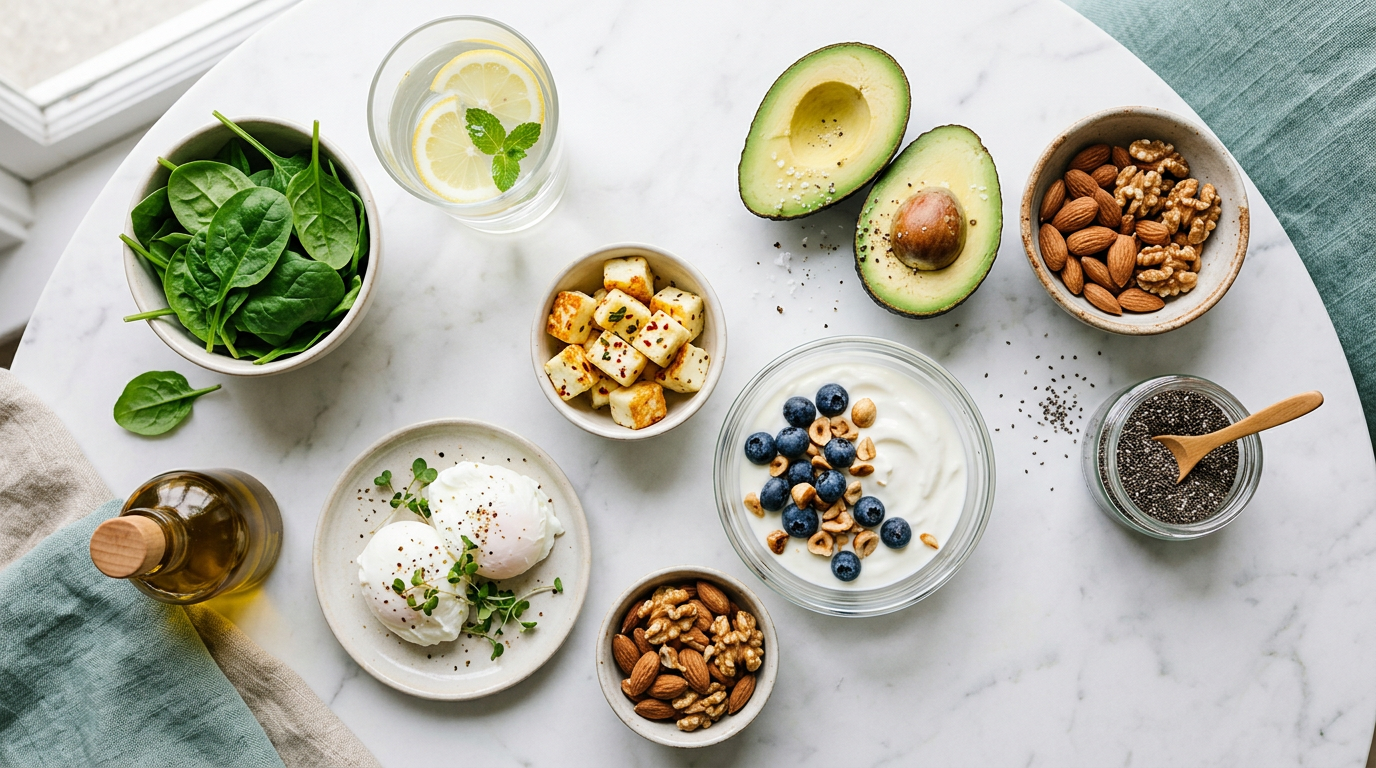
1. Avocado baked eggs with spinach and halloumi
Ingredients (1 serving): 2 eggs (100 g), half an avocado (70 g), 50 g fresh spinach, 40 g halloumi cubes, 5 g olive oil, black pepper and a pinch of za'atar.
Method: Heat the oven to 200°C. Wilt the spinach in the oil for one minute. Remove the avocado stone, scoop out a little flesh to make room and place the halves in a small dish with the spinach and halloumi around them. Crack an egg into each half, season, and bake for 12 to 15 minutes until the whites are set. This is a rich, slow-digesting suhoor with protein and healthy fats, and it keeps you comfortable through the afternoon.
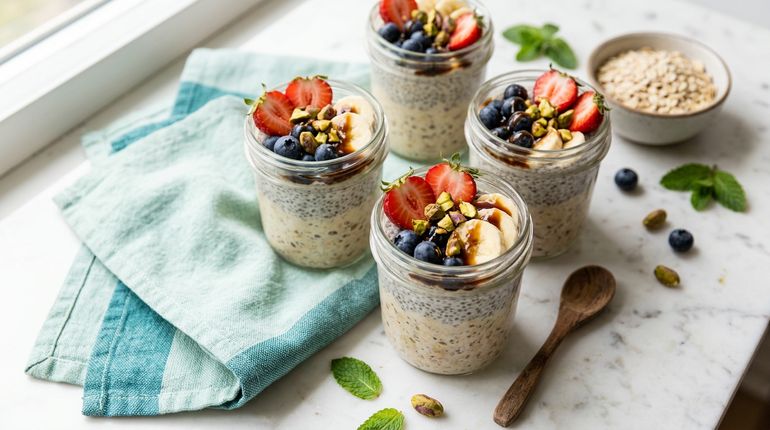
2. Chia and Greek yogurt pot
Ingredients (1 serving): 150 g unsweetened full-fat Greek yogurt, 20 g chia seeds, 15 g chopped almonds, 40 g raspberries, a pinch of cinnamon and 60 ml water or unsweetened almond milk.
Method: Stir the chia into the yogurt with the water, cover and chill for at least four hours or overnight. At suhoor, top with the almonds, raspberries and cinnamon. Chia absorbs liquid and swells, which adds fiber and a feeling of fullness. If you prefer sweetness, add a very small amount of stevia rather than honey or date syrup.
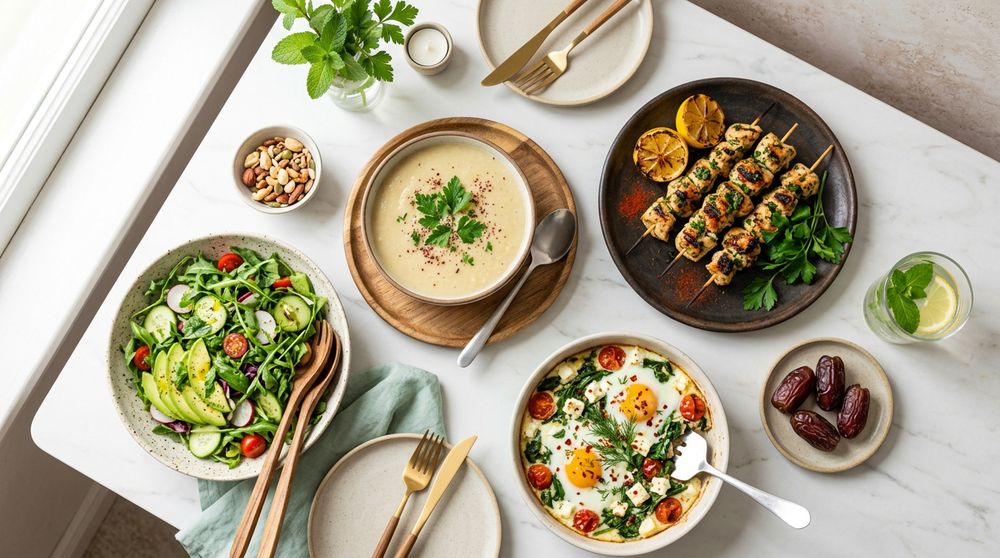
3. Light cauliflower and chicken soup
Ingredients (1 serving): 200 g cauliflower florets, 120 g chicken breast cubes, 30 g chopped onion, 1 garlic clove, 8 g olive oil, 300 ml unsalted chicken broth, half a teaspoon of cumin, a quarter teaspoon of turmeric, lemon juice and parsley.
Method: Sauté the onion and garlic in the oil, add the spices and chicken, then the cauliflower and broth. Simmer for 20 minutes, blend half of the soup for a creamy texture, and finish with lemon and parsley. A warm bowl of soup is a gentle way to open the meal, it replenishes fluids and a little sodium, and it takes the edge off your hunger before the main dish so you are less likely to overeat.
4. Lemon herb chicken skewers with tahini salad
Ingredients (1 serving): 180 g skinless chicken thigh pieces, 10 g olive oil, juice of half a lemon, 1 crushed garlic clove, paprika, oregano and black pepper. For the salad: 100 g cucumber, 60 g tomato, 50 g lettuce, chopped parsley and a dressing of 15 g tahini with lemon and water.
Method: Marinate the chicken for at least 30 minutes, thread onto skewers and grill or air-fry for 12 to 15 minutes, turning once, until cooked through with no pink inside. Toss the vegetables, drizzle with the tahini dressing and serve alongside. This is a satisfying main with about 36 g of protein, and the colourful salad adds fiber, potassium and freshness.
5. Garlic butter fish with roasted zucchini
Ingredients (1 serving): 180 g white fish fillet such as hamour or sea bass, 10 g butter, 5 g olive oil, 150 g sliced zucchini, 1 garlic clove, lemon slices, salt, pepper and dill.
Method: Roast the zucchini with the oil at 200°C for 10 minutes. Add the fish, top with the garlic, butter and lemon, and bake for another 10 to 12 minutes until it flakes easily. Fish is light on the stomach, high in protein and a good choice for a late, lighter second meal after taraweeh.
Hydration and electrolytes between iftar and suhoor
Most Ramadan headaches and low energy come from too little fluid, too little sleep and too much caffeine rather than from the diet itself. Aim to sip water steadily between iftar and suhoor, around eight cups for most healthy adults unless your doctor has told you otherwise. Soup, vegetables and yogurt also contribute fluids. Keep tea and coffee modest, and avoid very salty pickles and processed foods that make you thirsty the next day. If you notice dizziness, a racing heart or muscle cramps, break your fast and seek medical advice.
A simple weekly plan
| Day | Iftar | Suhoor |
|---|---|---|
| Day 1 | Water, soup, chicken skewers and salad | Avocado baked eggs |
| Day 2 | Soup, garlic butter fish and zucchini | Chia and Greek yogurt pot |
| Day 3 | Soup, chicken skewers and salad | Avocado baked eggs |
| Day 4 | Soup, fish and roasted vegetables | Chia and Greek yogurt pot |
Repeat the pattern through the week and swap in grilled meat or eggs when you want variety. Simple repetition makes shopping and cooking easier during a busy month.
Common mistakes with low-carb eating in Ramadan
- Skipping suhoor: it makes the afternoon much harder and often leads to overeating at iftar.
- Starting a strict diet on day one: the adjustment period combined with fasting can leave you exhausted.
- Drinking too little water: thirst is often mistaken for hunger, and dehydration worsens headaches.
- Fried food and sweets after taraweeh: a small portion is fine, but a full plate of sweets can cancel out a day of effort.
- Ignoring sleep: poor sleep raises hunger hormones and makes cravings stronger the next day.
Who should be careful?
A low-carb or ketogenic diet is not suitable for everyone, and fasting adds further considerations. If you are pregnant or breastfeeding, have diabetes and take insulin or other medication, have kidney, liver or heart disease, take blood pressure medication, or have a history of eating disorders, speak to your doctor before changing your diet in Ramadan. Medication timing often needs adjusting. If you feel unwell at any point, seek medical advice.
Want a Ramadan nutrition plan that fits your health and routine?
The Prof Health team helps you build a clear plan, follow your progress and adjust your menu before and during Ramadan, 100% online.
Book a nutrition consultation on Zoom Start the personalised diet plan
The service does not replace your doctor's follow-up, and every person's results differ.
Frequently asked questions
Can I follow keto while fasting in Ramadan?
Some healthy adults manage a low-carb approach, but it should be gradual and agreed with a doctor or dietitian, especially if you have a medical condition. A moderate low-carb menu is usually easier than a strict ketogenic one.
Should I break my fast with dates on a low-carb plan?
One date contains roughly 16 to 18 g of carbohydrates, so it will not fit a strict keto limit. Many people choose water and soup, or a single date, and then move on to the main meal. Decide with your dietitian what suits your goals.
How much weight can I lose in Ramadan?
There is no single number. Steady loss of around 0.25 to 0.5 kg per week is a realistic and sustainable target for many people, and it depends on your calories, sleep and activity.
Can I prepare these recipes ahead?
Yes. The soup keeps in the fridge for up to three days, the chia pot for 24 hours, and the chicken can be marinated the day before. Cook the fish and baked eggs fresh.
What can I use instead of dairy?
Use coconut yogurt without added sugar, and replace halloumi with extra eggs or feta alternatives that suit your diet. Check the label for hidden carbohydrates.
Why do I feel tired even on a healthy menu?
Fatigue often comes from dehydration, low sodium, poor sleep or eating too little. If it continues, speak to your doctor, as it can also signal low iron or other issues.
Read also
- Headache in Ramadan: 5 common causes and how to avoid it
- The dates and yogurt diet in Ramadan: is it safe?
- Keto electrolytes: 5 drinks and recipes to beat the keto flu
Health note: This content is educational and does not replace a doctor's advice. Do not stop any medication or change its dose without consulting your doctor, and results vary from person to person.
References
- Healthy diet, World Health Organization (WHO), https://www.who.int/news-room/fact-sheets/detail/healthy-diet