Strength Training After 40: How to Keep and Build Muscle, With a Practical 8-Week Plan
It is never too late to build muscle. International guidance, including the World Health Organization, recommends muscle-strengthening activities for the major muscle groups on two or more days a week for all adults, and evidence suggests that age-related muscle loss can be slowed with resistance training and enough protein. The practical takeaway: three short full-body sessions a week, gradual increases in load or repetitions, protein at every main meal, and enough sleep.
Many people ask us at Prof Health: "I am over 40. Can I still build muscle? Is lifting weights hard on my joints?" The short answer is that the body stays responsive to training at any age; what changes is how quickly it responds and how much patience and consistency we need. In this practical guide we explain what happens to muscle with age, what studies say, how to start with an eight-week plan, how to eat and sleep to support results, and which mistakes to avoid.
What happens to your muscles after 40?
For most people, muscle mass and strength decline gradually with age, especially with low activity and long hours of sitting. When the loss becomes significant, doctors use the term sarcopenia: a condition marked by reduced muscle mass, strength and function, linked with a higher risk of falls and disability. Prevalence estimates vary widely depending on the diagnostic criteria; some reviews report figures from 10% to 50% among older adults.
The good news is that evidence identifies resistance training as one of the most effective ways to increase muscle strength and mass, and the body keeps its ability to respond even later in life. So the best time to start is early: every year of regular training builds a reserve of strength that protects you later. If you are in your forties or fifties you are at a good time to begin, because building is easier than recovering after major loss.
What do studies and guidelines say?
- World Health Organization: adults should do muscle-strengthening activities at moderate or greater intensity, involving the major muscle groups, on two or more days a week, in addition to 150 to 300 minutes of moderate aerobic activity. For adults aged 65 and over, it recommends varied activity that emphasises balance and strength on three or more days a week to help prevent falls.
- Exercise plus nutrition: a recent network meta-analysis of trials in older adults found that combining exercise with nutritional supplementation worked best for grip strength, walking speed and a muscle-mass index, but the authors themselves noted that the certainty of the evidence was low to very low. We read it as a promising direction, not a guarantee.
- Protein alone is not enough: the same analysis found that protein supplements alone did not clearly improve muscle-mass index, while exercise alone improved strength and muscle mass. Training is the main driver; protein supports it.
- The right dose: reviews suggest that doing more sessions or sets than usual did not clearly add muscle in older adults with sarcopenia, and that two or three sessions a week produced similar gains. Consistency beats excess.
A note of honesty: many of these studies were done in older adults diagnosed with sarcopenia, and some improvements were small compared with the threshold regarded as clinically meaningful. So we do not promise specific results, but the overall picture is consistent: resistance exercise beats none, and safe progression beats rushing.
How to start safely: golden rules before your first session
- See your doctor first if you have heart disease, uncontrolled high blood pressure, diabetes, osteoporosis, joint pain, or have not exercised for a long time.
- Start light: choose a weight you can lift 10 to 12 times with two or three repetitions left in the tank.
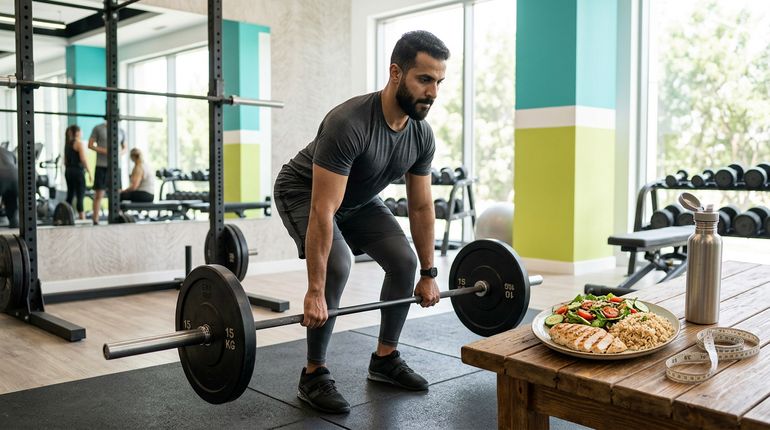
- Form before load: master the movement with body weight first, move slowly with control, and do not hold your breath.
- Warm up for 5 to 8 minutes with dynamic joint movements before lifting.
- Sudden pain means stop: muscle burn is normal, but sharp joint pain calls for stopping and checking.
An 8-week full-body plan
This plan suits beginners over 40. You need light to medium dumbbells, a resistance band and a stable chair. Train three days a week with a rest day between sessions; each session takes about 35 to 45 minutes.
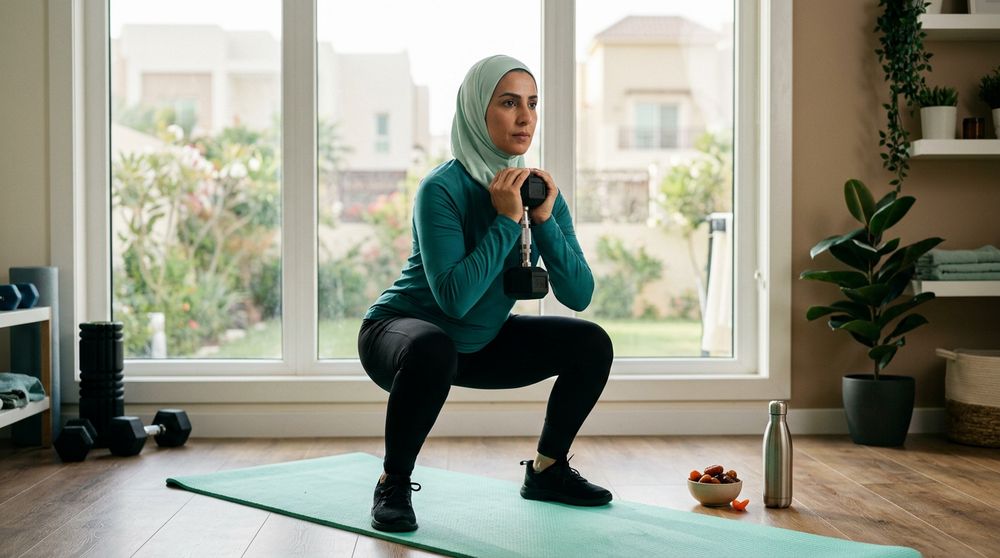
- Goblet squat: legs and glutes.
- Dumbbell Romanian deadlift: hamstrings and lower back, hinging at the hips, not the spine.
- Wall or chair push-up: chest, shoulders and arms.
- One-arm row: upper back and posture.
- Glute bridge: strengthens the glutes and protects the back.
- Dumbbell shoulder press: shoulders, done seated if you need support.
- Farmer carry and single-leg stand: grip and balance.
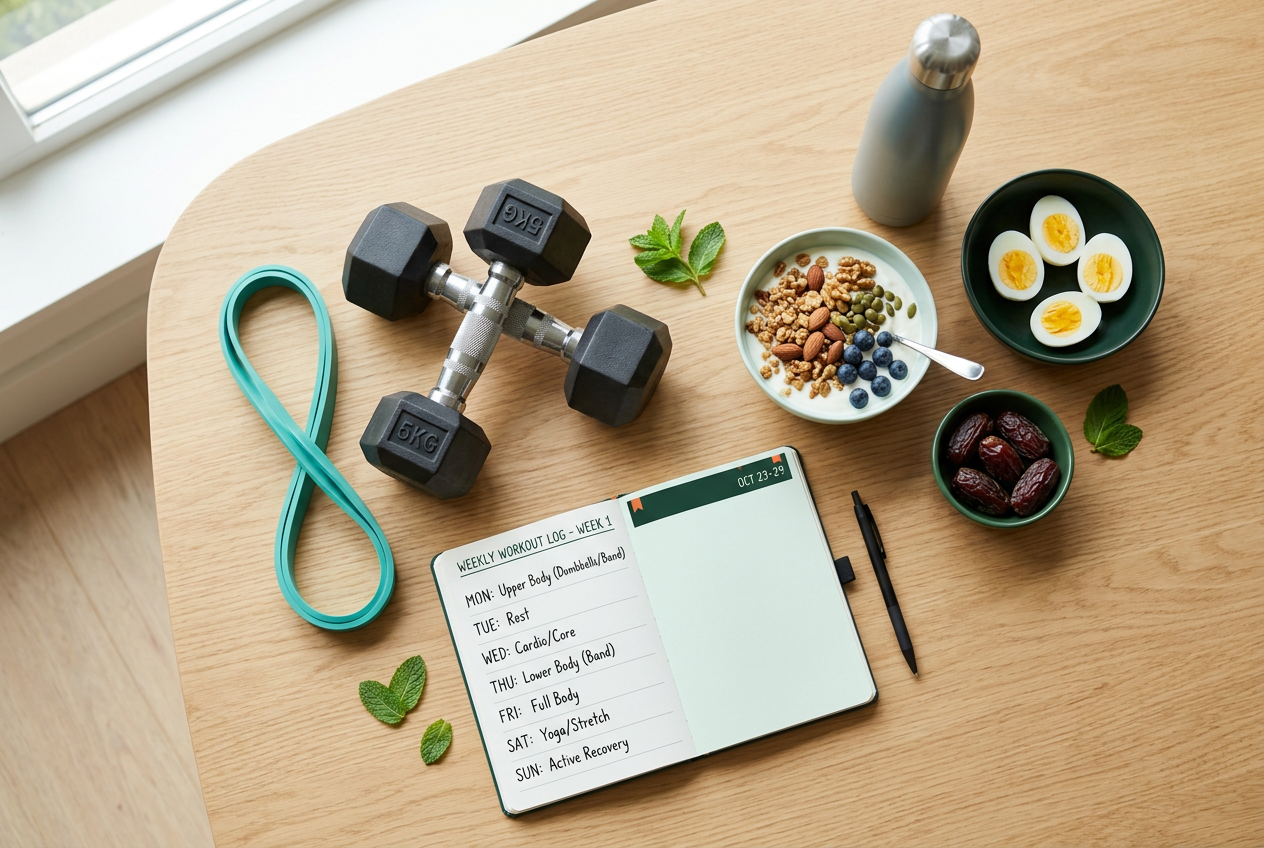
Weeks 1 and 2: two sets of 10 to 12 repetitions per exercise with a light weight, focusing on form. Weeks 3 and 4: same volume, but increase the weight slightly when the last repetitions feel easy. Weeks 5 and 6: three sets of 8 to 12 repetitions, gradually using heavier weights. Weeks 7 and 8: keep three sets, add roughly 2% to 5% load when ready, and in the final session reduce volume a little and test your progress. Write down your weights and repetitions in a small notebook; logging is the simplest way to progress.
Nutrition and sleep: half of the equation
Muscle is not built in the gym alone. Spread your protein across the day: eggs or Greek yogurt at breakfast, chicken, fish or lentils at lunch, and a handful of nuts or laban after training. Many sports nutrition guidelines suggest roughly 1.2 to 1.6 grams of protein per kilogram of body weight per day for people who train regularly, but the right number varies, and you should speak to your doctor first if you have kidney disease.
Sleep matters too: much of muscle repair happens during rest, and chronic late nights weaken recovery. Aim for 7 to 8 hours, keep a regular bedtime and cut caffeine after mid-afternoon. Water matters especially in Riyadh: drink regularly before and after your session. If you are considering supplements such as creatine or vitamin D, ask a specialist for testing and guidance instead of buying at random.
Training in Riyadh: heat, timing and place
- In hot months, prefer training at home or in an air-conditioned gym, and avoid running in direct sun.
- Pick a fixed time that suits your schedule: early morning, or after Maghrib if you like an extra walk.
- Keep a water bottle and a few dates ready before and after the session for energy and fluids.
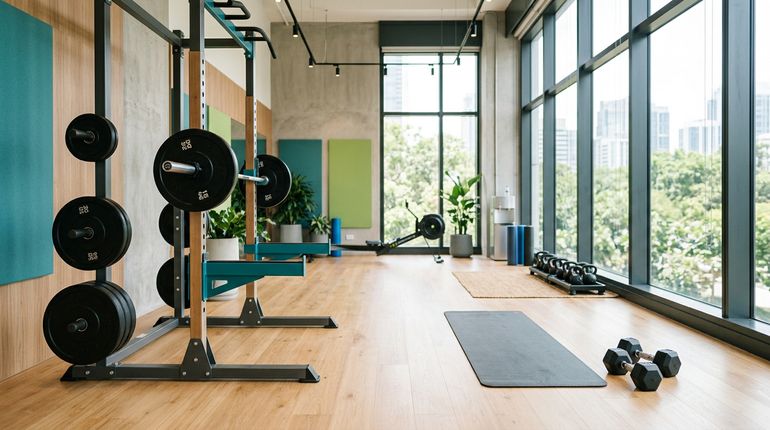
- Start with a small home corner: a mat-sized space, two dumbbells and a resistance band are enough.
Common mistakes that slow your progress
- Starting too heavy before mastering form, which raises injury risk.
- Relying on cardio only and skipping strength work, so muscle drops along with weight.
- Never increasing the load: muscle needs gradual challenge to grow.
- Neglecting rest and sleep and training the same muscle group every day.
- Cutting food too hard in the name of dieting, so some muscle is lost with the fat.
- Comparing yourself with others: compare yourself with yourself two months ago.
When to see a doctor
Stop exercising and see a doctor if you feel chest pain, unusual shortness of breath, severe dizziness, swelling, or sharp joint pain that does not ease with rest. If you take regular medication or have a health condition, discuss your training plan with a specialist before you begin. This article is general guidance and not a substitute for medical diagnosis or treatment.
Quick summary
- Muscles respond to training at any age; starting early is best.
- Three full-body sessions a week are enough to begin; consistency beats excess.
- Increase the load gradually and log your progress.
- Spread protein across meals and sleep 7 to 8 hours.
- See your doctor before starting if you have a health condition.
Frequently asked questions
Is lifting weights bad for the joints after 40? With a suitable weight and controlled movement it is safe for most people, and it may support joints by strengthening the muscles around them. If you have a joint problem, consult a doctor or a qualified coach.
How long until I see results? Many people notice strength gains within a few weeks, while visible changes take several months of consistency. Responses vary between individuals.
Do I need protein supplements? Not necessarily. If you meet your needs from food you do not need them; they are a practical option if reaching your target from food alone is hard.
Can I train only at home? Yes. Dumbbells, resistance bands and body weight are enough to build a good base of strength.
Sources
- World Health Organization 2020 guidelines on physical activity and sedentary behaviour — activity and muscle-strengthening recommendations for adults and older adults.
- Exercise and nutrition strategies for sarcopenia in older adults: a network meta-analysis — exercise with nutrition and age-related muscle loss.
- Optimal resistance training prescriptions in older adults with sarcopenia: a systematic review and meta-analysis — training dose and limits of benefit.
- NHS: Physical activity guidelines for adults aged 19 to 64 — strength exercises on at least two days a week.
Read also
- Progressive overload for building muscle: a 12-week log
- Protein supplements: myths and facts
- Muscle soreness after training: 7 recovery tips
Ready for the next step with Prof Health?
If you want a plan that brings training, nutrition and psychological support together in one programme, try the 30-Day Challenge by Prof Health, with specialists who follow you in nutrition, fitness and mental wellbeing, or book a personalised consultation with The Professor over Zoom to set your protein needs and a nutrition plan that fits your body and schedule. Start today; one session is enough to begin the journey.