Muscle Soreness After Workouts (DOMS): Why It Happens, How Long It Lasts and 7 Smart Ways to Recover
Muscle soreness that appears a day or two after a hard or unfamiliar workout is called delayed onset muscle soreness, or DOMS. It is usually harmless, peaks within one to three days and fades on its own. Light movement, sleep, good nutrition and gradual progression help the most, while lactic acid is not the culprit.
You finish a great leg day on Sunday, feel fantastic that evening, and then wake up on Tuesday unable to sit down on the toilet without gripping the wall. If that sounds familiar, you have met DOMS. It is one of the most common reasons beginners quit a new exercise routine in the first two weeks, and one of the most misunderstood topics in fitness. In this practical guide from Proof Health, you will learn what DOMS really is, why it happens, how long it lasts, seven smart ways to recover, the myths that waste your time, whether you should train while sore, how to prevent it, and how to stay comfortable while training in Riyadh.
What Is DOMS?
Delayed onset muscle soreness is muscle pain, tenderness and stiffness that develops after exercise that is strenuous, unfamiliar or both. According to Cleveland Clinic, it starts one to three days after your workout, which is why it is called delayed. Healthline adds that the symptoms typically begin 12 to 24 hours after exercise, the pain tends to peak about one to three days later, and it then usually eases.
DOMS feels like a dull ache that is worse when you stretch, squeeze or press on the muscle, and it usually improves a little as you warm up and move. It is different from the burning sensation you feel during the last repetitions of a hard set, which fades soon after you stop. It is also different from sharp, sudden pain during a lift, which may point to a strain and deserves attention.
Why Does It Happen? Eccentric Work, Not Lactic Acid
For years people were told that lactic acid builds up in the muscles and causes the next-day ache. That explanation has been debunked. Healthline explains that DOMS is caused by microscopic tears and muscle damage, and your body responds with inflammation, which creates the delayed soreness. The tears are not a sign that something is broken. They are part of how your muscles adapt and rebuild stronger.
The biggest trigger is eccentric exercise, where the muscle tenses while it lengthens. Lowering a dumbbell slowly, descending into a squat, walking downhill or stepping down a long staircase are all eccentric actions. This is why a hike down a hill or the first week of a new lunge routine can leave your thighs sore even when the workout did not feel extremely hard. Cleveland Clinic notes that DOMS usually appears after you try a new activity, a new kind of training, or a workout that is more intense than you are used to.
How Long Does DOMS Last?
For most healthy people the timeline is predictable:
- Hours 0 to 12: you often feel fine, or only slightly tired.
- Hours 12 to 24: stiffness and tenderness start to appear.
- Hours 24 to 72: soreness is at its strongest, usually around the second day.
- Days 4 to 7: the ache fades and strength and range of motion return to normal.
If your soreness is getting worse after day four, or it is sharp, localized and different from the usual dull ache, treat it as something else and speak to a professional.
Seven Smart Ways to Recover Faster
Time is the only real cure for DOMS, but you can make the waiting period more comfortable and protect your next workouts. Research findings on recovery tools are mixed, so think of the tips below as comfort and consistency measures rather than magic fixes.
1. Keep Moving Gently
A systematic review on treatment strategies published in Sports Medicine concluded that exercise is the most effective way to ease pain during DOMS, although the pain relief is temporary. Choose a 20 to 30 minute easy walk, light cycling, an easy swim or gentle yoga. The goal is blood flow, not a hard session. Stay at a conversational pace and stop if pain becomes sharp.
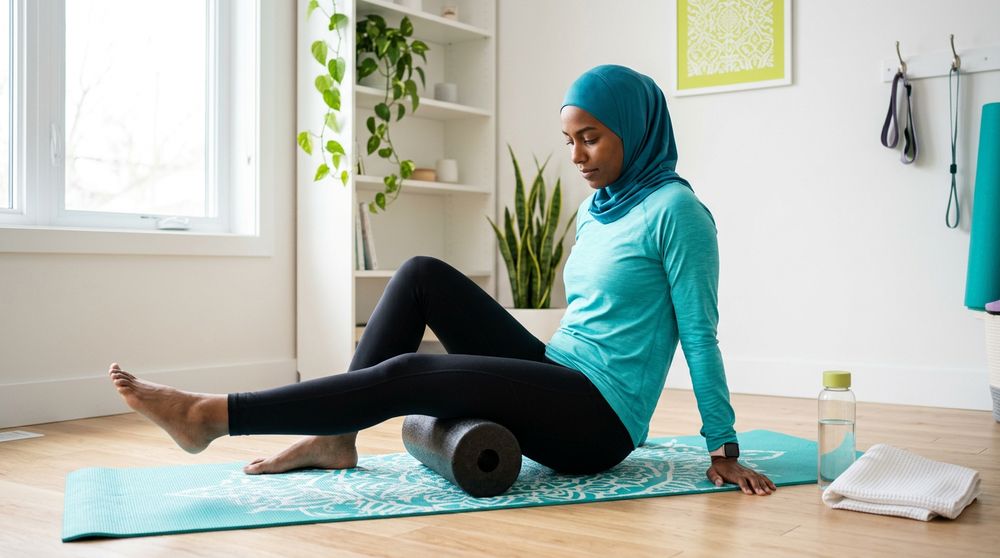
2. Try Foam Rolling
In a controlled laboratory study of eight active men published in the Journal of Athletic Training, participants who foam rolled for 20 minutes right after a demanding squat session and again 24 and 48 hours later recovered better than those who did not, with less loss of sprint speed, power and strength-endurance. The sample was small, so treat the evidence as encouraging rather than final. Roll slowly for 60 to 90 seconds per muscle group, use moderate pressure, and avoid rolling directly over bruises or joints.
3. Prioritize Sleep
Sleep is when most repair work happens. Poor sleep and inadequate recovery between workouts are common reasons soreness feels worse and lasts longer. Aim for a consistent bedtime, a cool dark room and a screen-free hour before bed, especially if you train in the evening.
4. Eat Enough Protein and Carbohydrates
Your muscles need amino acids to repair damaged fibers and carbohydrates to refill energy stores. Spread protein across the day with foods such as eggs, yogurt, chicken, fish, lentils and labneh, and add fruit, dates, rice or oats around your training. Protein will not erase soreness, but adequate daily intake supports the repair process. If you use a protein supplement, treat it as a convenient top-up, not a replacement for meals.
5. Hydrate Consistently
Dehydration can make you feel more fatigued and stiff, and it is easy to underestimate in Riyadh's dry climate. Sip water through the day, add an electrolyte source after long or sweaty sessions, and check that your urine is pale yellow.
6. Use Warmth and Light Massage
A warm shower, a warm compress or a gentle self-massage can relax tight muscles and make movement easier. Massage has shown mixed results in studies, which may depend on its timing and technique, so keep the pressure comfortable and enjoy it as a way to relax rather than expect a dramatic effect.
7. Reduce Volume, Not Consistency
If you must train again before the soreness is gone, lower the intensity and duration for a day or two, or train body parts that are not sore. The same Sports Medicine review suggests exactly this approach for people who train daily. For example, swap heavy leg work for upper-body training, or replace a run with a walk.
What Does Not Help as Much as You Think
- Stretching to prevent soreness: the Sports Medicine review found that stretching, cryotherapy, homeopathy and ultrasound showed no effect on alleviating DOMS symptoms. Gentle stretching may feel pleasant, but do not expect it to stop soreness.
- Pushing through severe pain: Cleveland Clinic points out that the saying "no pain, no gain" is not necessarily true, and a workout can still be productive without DOMS.
- Complete bed rest: staying completely still tends to make stiffness feel worse. Gentle movement is usually better.
- Chasing soreness as proof of progress: your muscles can adapt and grow without leaving you unable to climb the stairs.
Should You Train While Sore?
Use this simple traffic-light approach:
- Green (mild soreness, full movement): train as planned, with a longer warm-up.
- Yellow (moderate soreness, stiff but mobile): do lighter work, lower volume or a different muscle group.
- Red (severe soreness that limits movement, or sharp pain): take an easy recovery day and consider seeing a professional if it does not improve.
Healthline recommends skipping high-intensity cardio or heavy power lifting while you are very sore, because it may worsen and delay recovery.
How to Prevent DOMS Next Time
You cannot eliminate DOMS completely, but you can make it much milder. The most effective strategy is gradual progression. Add small amounts of volume or weight each week, introduce new exercises with fewer sets, and keep easy days easy and hard days hard. Your body also benefits from the repeated bout effect: after the first unfamiliar session, your muscles adapt, and the same workout usually causes much less soreness the next time. A proper warm-up helps you perform better and feel better, even though it does not guarantee zero soreness.
Training and Recovering Comfortably in Riyadh
- Train early in the morning or after sunset in summer, and use air-conditioned spaces during the hottest hours.
- Keep a water bottle within reach during the day, not only during workouts.
- Include salty foods or an electrolyte drink after heavy sweating.
- Use a short cool-down walk indoors before showering and stretching lightly.
- Plan lighter days after long weekend sessions so your Sunday does not start with stiff legs.
When to Speak With a Doctor
DOMS is usually safe to manage at home, but see a doctor promptly if you notice severe swelling, marked weakness, very dark urine, sharp pain that keeps increasing, pain that lasts well beyond a week, or soreness that appears after almost every workout. Cleveland Clinic advises talking to a provider if you have DOMS often after your workouts so they can make sure you are not injured and are training safely. This article is general education and does not replace medical advice, especially if you are pregnant, have a chronic condition or take medication.
Quick Recap
- DOMS is soreness that starts 12 to 24 hours after unfamiliar or hard exercise and peaks around one to three days.
- It is linked to microscopic muscle damage and inflammation, not lactic acid.
- Gentle movement, foam rolling, sleep, protein, carbohydrates and hydration make recovery more comfortable.
- Stretching and ice are not proven to prevent or cure soreness.
- Gradual progression is the best prevention.
- Sharp pain, severe swelling, weakness or dark urine need medical attention.
Frequently Asked Questions
Does soreness mean my workout was effective?
Not necessarily. Soreness shows that your muscles met an unfamiliar stimulus, but progress depends on consistent training, nutrition and recovery. You can build strength without feeling sore.
Is it safe to exercise when I am sore?
Light to moderate activity is usually fine and may reduce discomfort, but avoid very intense training on the sore muscles until the pain eases.
Should I take painkillers for DOMS?
Most people manage without them. If you consider medication, ask a doctor or pharmacist first, especially if you have stomach, kidney or heart conditions.
Why am I sore even though I train regularly?
A new exercise, a heavier load, slower lowering phases or a return after a break can all trigger DOMS in experienced trainees. Increase the load gradually.
Sources
- Cleveland Clinic: Delayed Onset Muscle Soreness (DOMS) — definition, timing and when to speak to a provider.
- Cheung K, Hume P, Maxwell L. Delayed onset muscle soreness: treatment strategies and performance factors. Sports Medicine, 2003 — exercise, massage, stretching and training adjustments.
- Foam Rolling for Delayed-Onset Muscle Soreness and Recovery of Dynamic Performance Measures, Journal of Athletic Training — foam rolling after a squat protocol.
- Healthline: What to Know About Delayed Onset Muscle Soreness (DOMS) — symptoms, causes, eccentric exercise and training while sore.
Read Also
- Warm-up and cool-down: an 8-minute routine
- Bodyweight exercises and a home plan
- Strength training for women: a 3-day plan
Ready for the Next Step With Proof Health?
If you want a complete programme with nutrition, fitness and psychological support specialists, or a personalised nutrition consultation with the Professor over Zoom, the Proof Health team is here to guide you step by step. Contact us now through our website, book your consultation and build a training and recovery plan that fits your body and your schedule.