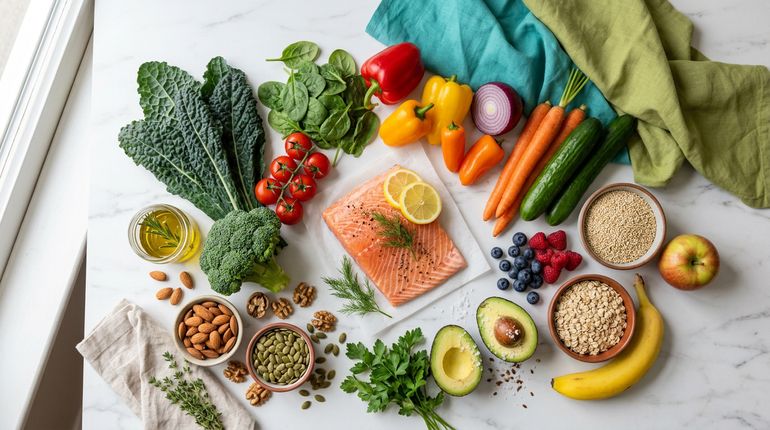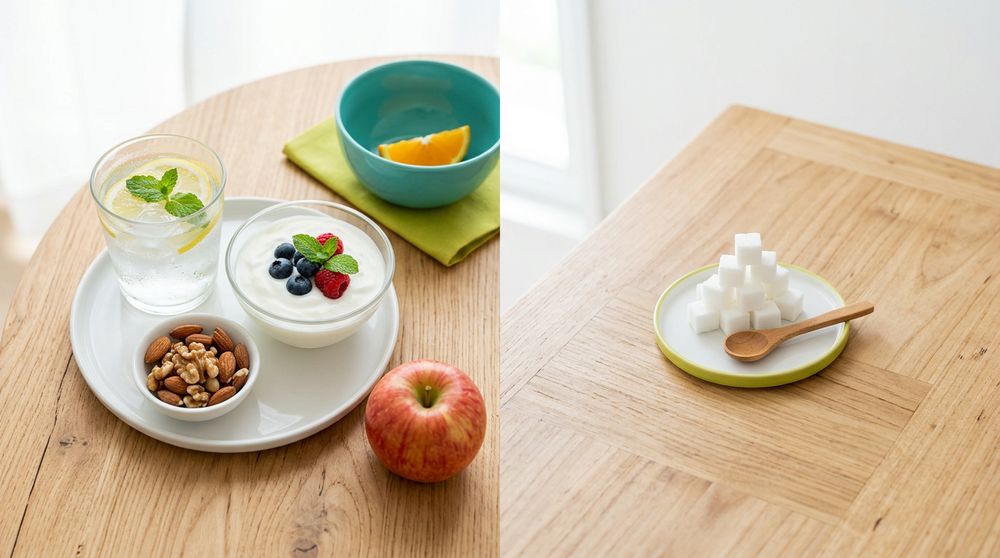
Hidden Sugar: How Many Grams a Day Is Too Many? A Practical Guide to Cutting Back Without Deprivation
Short answer: The World Health Organization recommends keeping free sugars below 10% of your total daily energy, and ideally below 5% (roughly 25 grams, or 6 teaspoons). Because most sugar hides in drinks, sauces and processed foods, reading the nutrition label and cutting sweetened drinks gradually is the easiest place to start.
Quick answer: The World Health Organization recommends keeping free sugars below 10% of your total daily energy, and below 5% (roughly 25 grams, or 6 teaspoons) for additional benefits. The catch is that most of the sugar we eat never comes from the sugar bowl. It hides in drinks, sauces, flavored yogurt and juices. This guide shows how much you need, where sugar hides, and how to cut back in 7 days without feeling deprived.
What are free sugars?
Free sugars are sugars added to foods and drinks by the manufacturer, cook or consumer, plus the sugars naturally present in honey, syrups, fruit juices and fruit juice concentrates. The sugar inside whole fruit, vegetables and milk is not counted as free sugar, because it comes packaged with fiber, water and nutrients that slow absorption and help you feel full.
How many grams of sugar per day?
WHO guidance sets the upper limit for free sugars at under 10% of total calories, with under 5% as the better target. According to WHO, the 5% target works out to roughly this:
| Level | Share of calories | Approx. grams per day | Teaspoons |
|---|---|---|---|
| Recommended upper limit | Under 10% | Depends on your calorie needs | Depends on your needs |
| Better target | Under 5% | About 25 g | About 6 |
Your numbers shift with your calorie needs: the lower your energy needs, the lower your upper limit in grams. It is also worth knowing that WHO ranks the 10% advice as a 'strong' recommendation, while the 5% target is 'conditional' because fewer studies exist at very low intakes.
Where does sugar hide in your day?
Many people assume they eat little sugar because they skip soda. The examples below vary by brand and serving size, but they can be surprising:
- One can of soft drink: according to WHO, a single can can contain up to about 40 g (around 10 teaspoons), which is more than the whole 5% daily target.
- Energy drink: a high amount of sugar per serving, so check the label.
- Packaged fruit juice: counts as free sugars even when labeled 'natural'.
- Flavored yogurt: usually carries more added sugar than plain yogurt.
- A cup of karak tea or sweetened iced coffee: adds noticeable sugar depending on the number of spoons.
- Ready-to-eat cereal or granola: may contain added sugar despite a healthy image.
- One tablespoon of ketchup or sweet sauce: about 4 g (around 1 teaspoon) according to WHO.
Picture an ordinary day: a karak in the morning, a flavored yogurt at breakfast, a juice box with lunch and a sweet after dinner. You can pass your daily limit easily without ever feeling you overdid it.
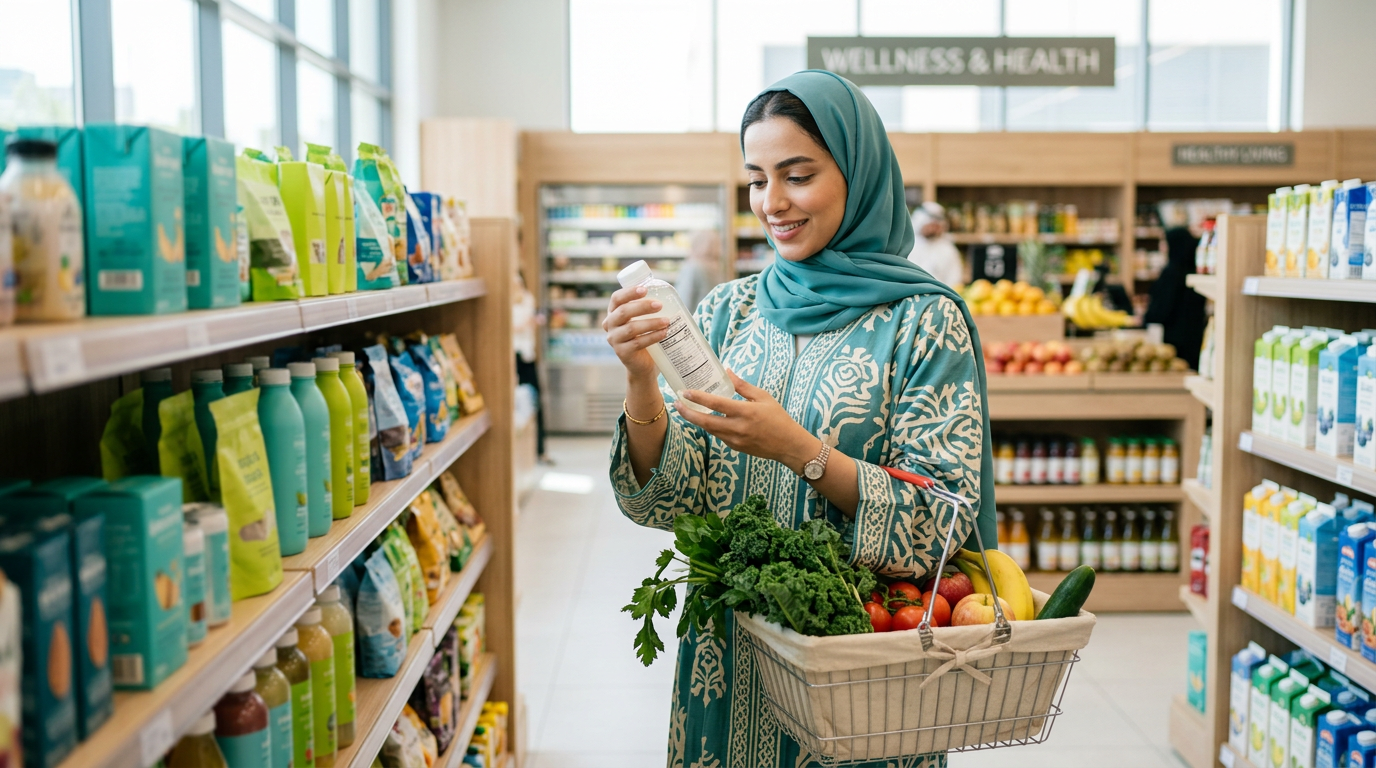
How to read a nutrition label like a pro
- Find 'sugars' or 'added sugars' on the nutrition panel, and compare per serving, not per pack.
- Learn the aliases: corn syrup, glucose-fructose syrup, molasses, maltose, dextrose and fruit juice concentrate.
- Check the ingredient order: the first ingredient is the largest. If sugar appears in the top three, the product is probably very sweet.
- Divide grams by 4 to see the teaspoon equivalent. Seeing the spoons makes the number real.
Why cutting back matters
WHO's review found that adults who eat less sugar tend to weigh less, and that more sugar in the diet is linked with weight gain. Tooth decay rates also rise when free sugars exceed 10% of energy. Sweetened drinks are the biggest culprit, because liquid calories do not fill you up the way solid food does. At the same time, some researchers argue that the evidence behind the stricter 5% figure is limited. The practical message is therefore to reduce added sugar step by step while keeping a balanced diet rich in protein and fiber, rather than chasing zero.
A 7-day plan to cut sugar without deprivation
- Day 1 – Measure: write down everything you eat and drink, and read the labels to learn your starting number.
- Day 2 – Drinks: swap one sugary drink for water, lemon sparkling water or unsweetened green tea.
- Day 3 – Breakfast: choose plain yogurt with fresh fruit and a handful of nuts instead of flavored yogurt.
- Day 4 – Hot drinks: trim half a teaspoon from your tea or coffee each day until your taste adjusts.
- Day 5 – Sauces: make quick dressings with yogurt, lemon and herbs instead of sweet bottled ones.
- Day 6 – Sweets: make your weekly dessert intentional and small, and favor a few dates with nuts.
- Day 7 – Review: compare with Day 1 and pick two habits to keep next week.
To stay fuller while you cut back, also read: Dietary Fiber for a happier gut and longer fullness, High-protein diet breakfast recipes, and Mindful eating and a 7-day plan.
Common mistakes to avoid
- Trusting words like 'diet' or 'no added sugar' without checking the rest of the label and the calories.
- Cutting sugar completely, which often backfires into binge eating.
- Drinking juice instead of eating fruit. Whole fruit gives you more fiber and fullness.
- Overusing fat-free products, which often add extra sugar to make up for taste.
- Ignoring sleep, since short sleep raises cravings for sweets.
Frequently asked questions
Do the sugars in whole fruit and milk count toward the daily limit?
No. According to WHO guidance, the recommendation does not refer to the sugars in fresh fruits and vegetables or the sugars naturally present in milk, because there is no reported evidence of adverse effects from them.
Are honey and syrups better than white sugar?
In guideline terms, honey, syrups and fruit juices count as free sugars just like table sugar, so moderation applies to them too.
What is the difference between free sugars and added sugars?
The terms overlap: added sugars are those put in during processing or cooking, including sweeteners, sugars from syrups and honey, and concentrated juices. They do not include sugars naturally found in milk, vegetables and fruits, according to the US Centers for Disease Control and Prevention (CDC).
Does sugar affect teeth?
Yes. WHO notes higher rates of tooth decay when free sugars go above 10% of total energy compared with intakes below that level.
Do I need to cut sugar out completely?
Not necessarily. The practical message is to reduce added sugar step by step while keeping a balanced diet, because cutting it completely often backfires into binge eating.
Is swapping sweetened drinks enough?
It is a strong step because sweetened drinks are the biggest source linked to the problem, but also review flavored yogurt, sauces, ready-to-eat cereals and desserts.
When to talk to a professional
If you have diabetes, insulin resistance, a thyroid condition, are pregnant, or have strong constant sugar cravings, speak with your doctor or a registered dietitian before changing your diet. This article is general education and does not replace medical diagnosis or treatment.
Start your journey with Prof Health today
Want a nutrition plan that fits your lifestyle and budget in Riyadh? The Prof Health team helps you build a personalized nutrition plan, cut sugar step by step and track your progress with practical support, alongside fitness programs and courses that suit you.
Contact the Prof Health team now through our website, book your consultation and start your healthy plan.
- Personalized diet plan with one-to-one follow-up
- Book an online nutrition consultation
- The 30-day Challenge by Proof Health
For questions on WhatsApp: 0557 340 413
Sources
- World Health Organization: WHO calls on countries to reduce sugars intake among adults and children
- World Health Organization: Healthy diet fact sheet
- CDC: Get the Facts: Added Sugars
Primary source: WHO guideline on sugars intake for adults and children (2015). Product examples are approximate and vary by brand.