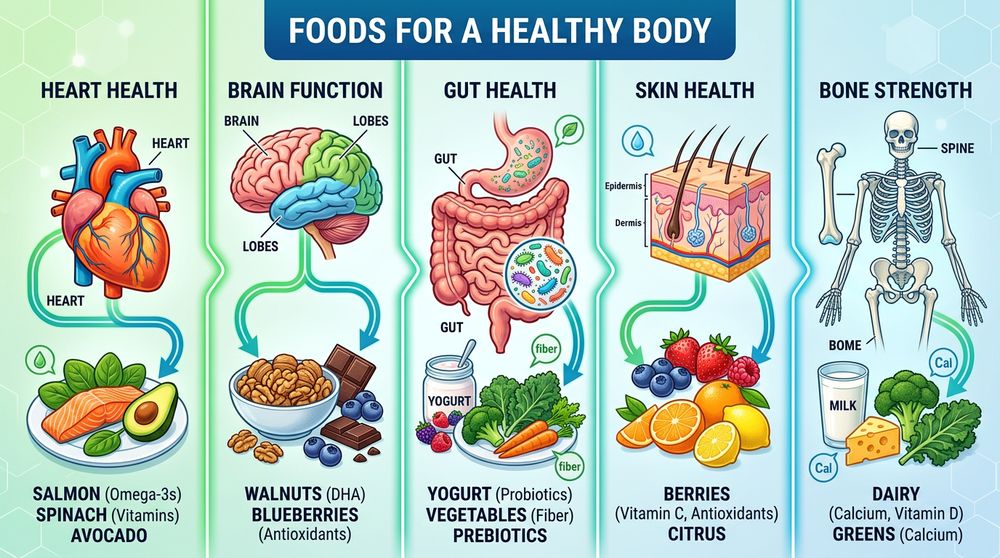
How Balanced Nutrition Protects Every Organ in Your Body — A Scientific Guide
Quick answer
Balanced nutrition supports every organ: the heart with unsaturated fats and vegetables, the brain with a varied supply of nutrients, the gut with fibre, and bones with calcium and vitamin D alongside physical activity. The World Health Organization states that a healthy diet helps prevent conditions such as diabetes and heart disease. Nutrition is essential support, not a cure — ask your doctor or nutritionist about your own situation.
What you eat affects your whole body — from heart to gut — and what you lack determines how strong or weak your organs are.
Your body is not a single unit — it is an integrated system of organs that communicate constantly. Each organ needs specific nutrients to function at its best. This guide shows how balanced nutrition protects every organ in your body.
❤️ Heart: Nutrition as Your Best Protection
The World Health Organization notes that healthy diets help prevent heart disease and other non-communicable diseases. The good news: balanced nutrition is one of the most important ways to support heart health:
- Omega-3 fatty acids (salmon, mackerel) are unsaturated fats that are recommended over saturated fats
- Berries, tomatoes and dark chocolate protect the blood-vessel wall
- Cutting back on salt and added sugar lowers blood pressure and protects the heart's arteries
🔬 A diet rich in fish, olive oil and vegetables matches the unsaturated-fat and vegetable recommendations stressed by the World Health Organization.
🧠 Brain: Fuel for Memory and Focus
Your brain uses a large share of your body's energy and needs specific nutrients to work at its best:
- Omega-3 fatty acids: build brain-cell membranes and support memory and reaction speed
- Polyphenols (Brazil nuts, berries, colourful vegetables): protect the brain from oxidative stress
- Magnesium (nuts, flaxseed): supports many biochemical reactions in the nervous system
- Vitamins B12 and B9: needed to turn food into nerve energy
🦠 Gut: Your Digestive and Immune Partner
The gut plays an important role in digestion and overall health. Healthy gut bacteria (the microbiome) need your food to thrive:
- Prebiotics: garlic, onion, banana — food for friendly bacteria
- Probiotics: laban, yogurt, kefir — to boost beneficial bacteria
- Dietary fibre: legumes, fruit, whole grains
Do you suffer from bloating, constipation or chronic tiredness? These may be signals from your gut.
Prof Health nutritionists build a nutrition plan that supports your gut microbiome.
💊 Hormones: A Delicate Balance
Nutrition affects hormone health in general, and some nutritional deficiencies may be linked to specific disorders — diagnosis always belongs to your doctor:
- Zinc and vitamin D deficiency: may be linked to lower testosterone
- Omega-3 deficiency: may be linked to worse PCOS symptoms and insulin resistance
- Too much added sugar: hurts energy and overall health
- Iron deficiency: may be linked to menstrual irregularity and anaemia
✨ Skin and Hair
- Vitamin C (lemon, red pepper) → supports collagen formation → glowing skin
- Biotin / vitamin B7 (eggs, nuts) → stronger hair and nails
- Lycopene and carotenoids (tomato, carrot) → support skin health
- Zinc and iron deficiency → hair loss and pale skin
🦴 Bones: The Deepest Foundation
Bones are not a rigid frame — they renew constantly and always need nourishment:
- Calcium + vitamin D + K2 = the ideal combination for building bone
- Magnesium helps regulate calcium absorption
- Physical activity + balanced nutrition support bone health and lower the risk of osteoporosis
Summary: What Does Each Organ Need?
| Organ | Main nutritional support |
|---|---|
| Heart | Fish, olive oil, vegetables, and less salt and added sugar |
| Brain | Omega-3, magnesium, B vitamins, colourful vegetables |
| Gut | Fibre, laban and yogurt, garlic, onion and banana |
| Hormones | Varied food covering zinc, iron and vitamin D, with doctor follow-up |
| Skin and hair | Vitamin C, eggs and nuts, tomato and carrot |
| Bones | Calcium, vitamin D and magnesium with physical activity |
Frequently Asked Questions
How do I know my nutrition is unbalanced?
Signs: chronic tiredness, hair loss, dull skin, mood swings, irregular digestion — all may point to a specific nutritional deficiency.
Can nutrition treat my health condition?
Nutrition is not a treatment — but it is essential support for any treatment. Prof Health nutritionists work alongside your treating doctor.
Which nutrient do people in Saudi Arabia often overlook?
Vitamin D (despite the abundant sun), magnesium and omega-3 — it is advisable to check these three with your doctor or nutritionist before taking any supplement.
More Questions
Do I need supplements to make up a deficiency?
Nutrients should mainly come from varied food. Do not start any supplement before checking with your doctor or nutritionist, especially if you have a health condition.
Is food alone enough for bone health?
No; balanced nutrition supports bones and regular physical activity helps too. The CDC recommends regular moderate activity across the week plus muscle-strengthening activity for adults.
Should I replace my medication with nutrition?
No. Nutrition supports treatment but does not replace it; never stop a medicine without talking to your doctor.
Where do I start improving my diet?
Start by varying vegetables, fruit, legumes and whole grains and cutting back on processed foods and added sugar, then ask for a plan that fits your condition.
When should I see a doctor?
If tiredness, hair loss, menstrual changes or any worrying symptom continues, see a doctor for the right tests instead of self-diagnosing.
🌿 Want to know exactly what your body is missing?
A nutrition consultation with a full analysis — a plan tailored to every organ in your body
📲 Book your consultation on WhatsApp: 0557 340 413
Plans That Help You Put It Into Practice
📖 Read also
Sources
- World Health Organization — Healthy diet
- CDC — Tips for Healthy Eating for a Healthy Weight
- CDC — Adult Activity: An Overview
This content is for awareness only and does not replace advice from your doctor or nutritionist.