Weight Gain Supplements for Saudi Women — Which Are Safe and Which Are Misleading? Complete Scientific Guide
Short answer: Some supplements have scientific support and are generally considered safe when used as directed, such as whey protein, creatine, vitamin D, magnesium and zinc, while appetite-stimulant products, hormone supplements and unknown herbal blends from social media should be avoided. A supplement never replaces enough food and resistance training, and your real need should be set by blood tests and a nutrition specialist.
📅 October 2026 | By the Prof Health team — nutrition experts | Scientific review: October 2026
The weight gain supplement market is huge — but many of these products lack strong scientific evidence for their claims. Prof Health puts the facts in your hands.
📌 What are weight gain supplements?
Weight gain supplements are concentrated or isolated nutrients meant to raise daily calories or support muscle building. They fall into 4 categories: proteins, dense carbohydrates, healthy fats, and supporting vitamins/minerals.
✅ Scientifically safer supplements for women
| Supplement | Benefit for weight gain | Safe use | Note on the evidence |
|---|---|---|---|
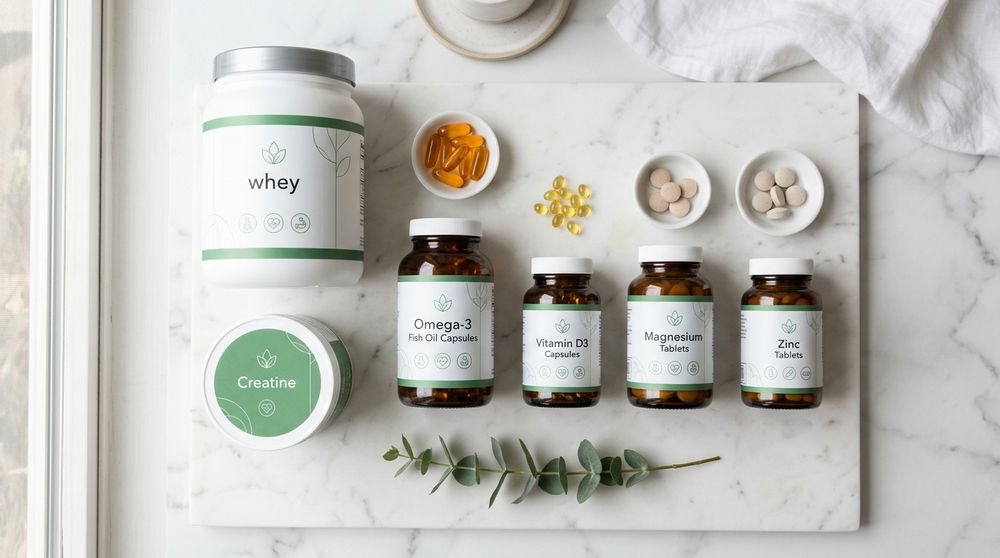
| 💪 Whey protein | Builds muscle and raises daily protein | After training or in the morning, in the amount your specialist sets | 🟢 Commonly used alongside resistance training |
| ⚡ Creatine monohydrate | Supports training strength and may add a little weight (water retention) | At the dose on the product and with specialist guidance | 🟢 Generally considered safe when used as recommended (Mayo Clinic) |
| ☀️ Vitamin D3 + K2 | Better calcium absorption and hormone support | Based on your vitamin D test result | 🟢 Set by testing |
| 🫀 Magnesium | Better sleep and lower cortisol = better muscle building | In the evening at the dose your specialist recommends | 🟡 Effect varies from person to person |
| 🧀 Zinc | Stimulates appetite and supports reproductive hormone production | With food, at a moderate dose | 🟡 Excess is not advisable |
| 🥩 Casein protein | Builds muscle during sleep (slow-digesting) | About an hour before bed | 🟡 A good extra option |
| 🐟 Omega-3 (DHA/EPA) | Lower inflammation and support for insulin sensitivity | Daily at the recommended dose | 🟡 A good extra option |
| 🫙 Natural mass gainer | High calories with protein for those who struggle to eat | One serving daily when needed | 🟡 Conditional on low sugar and resistance training |
❌ Supplements to avoid entirely
| Supplement | Why avoid it? | Risk |
|---|---|---|
| 🚫 Mass gainer with excess sugar | Insulin resistance and belly-fat storage rather than muscle | 🔴 High |
| 🚫 Appetite-stimulant pills (Primobolan, cyproheptadine) | Serious side effects that may include delayed periods and psychological disturbances | 🔴 Very high |
| 🚫 Hormone supplements (DHEA, herbal testosterone) | May harm hormonal balance and the liver | 🔴 Very high |
| 🚫 Unknown herbal blends from social media | Unknown contents and drug interactions | 🔴 Unknown |
📊 Supplement priority — where do you start?
- 🧬 Vitamin D3 first — deficiency is common in many women and is confirmed by a blood test; it supports absorption
- 🧀 Zinc + magnesium — may support appetite and improve sleep
- 💪 Whey protein — once you are doing resistance training
- ⚡ Creatine — after a few weeks of training
- 🐟 Omega-3 — if you do not eat fish regularly
❓ Most searched questions about weight gain supplements
Are weight gain supplements safe for women?
Direct answer: Supplements with scientific evidence (D3, magnesium, whey protein, creatine) are safe at recommended doses. The problem is products of unknown origin or with unlicensed appetite stimulants — these deserve a warning.
Does a mass gainer really add weight?
Direct answer: Yes, but only under a very specific condition. A mass gainer works with resistance training. Without it, the gain is mostly belly fat, not muscle. Also choose products low in sugar.
How long until you see results from weight gain supplements?
Direct answer: It differs from one supplement to another and from person to person. Creatine may show an effect on weight and strength relatively early, vitamin D and magnesium need time and follow-up testing, and whey protein supports muscle gradually over weeks to months alongside resistance training.
Do I need supplements if I follow a specialised nutrition plan?
Direct answer: Not necessarily. A balanced nutrition plan is enough for many women. Supplements are only an addition for those with a real deficiency confirmed by a blood test.
Can I rely on supplements instead of food?
Direct answer: No. A supplement is added to a balanced diet and never replaces it, and the World Health Organization advises that healthy diets be built on minimally processed foods.
Is creatine suitable for every woman?
Direct answer: Creatine is generally considered safe for healthy people when used as recommended, but anyone with kidney disease or another health condition should talk to a doctor first and choose a trusted, independently tested product.
Do supplements affect pregnancy or breastfeeding?
Direct answer: If you are pregnant, breastfeeding or taking medication, ask your doctor before any supplement.
Important note: This content is for general health education and does not replace advice from a doctor or pharmacist.
📚 Read also
💊 Before any supplement — get a personalised nutrition plan first
Prof Health works out which supplements you actually need based on your body's tests, with a personalised nutrition plan and follow-up.
🌿 Book an online nutrition consultation →
For enquiries on WhatsApp: 0557 340 413
Sources
- Mayo Clinic — Creatine
- WHO — Healthy diet fact sheet
- Mayo Clinic — Strength training: Get stronger, leaner, healthier
📅 Last reviewed: October 2026