Strength Training for Women: Will Lifting Make You Bulky? Myths, Benefits and a 3-Day Starter Plan
Strength training does not automatically make women bulky. Start with controllable resistance and progress gradually; guidance recommends strengthening muscles at least two days a week.
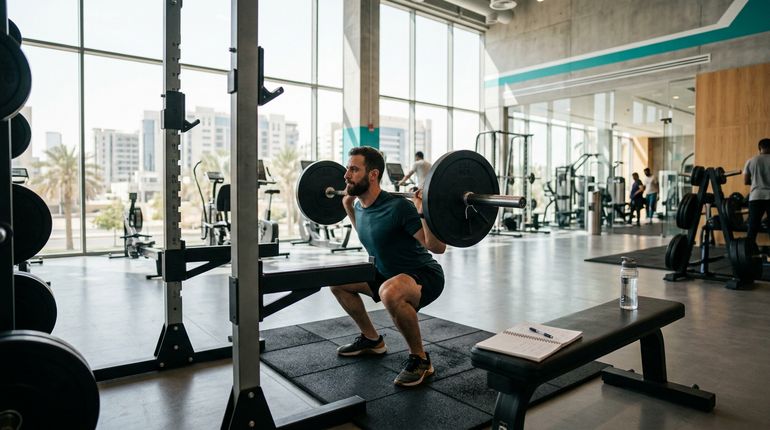
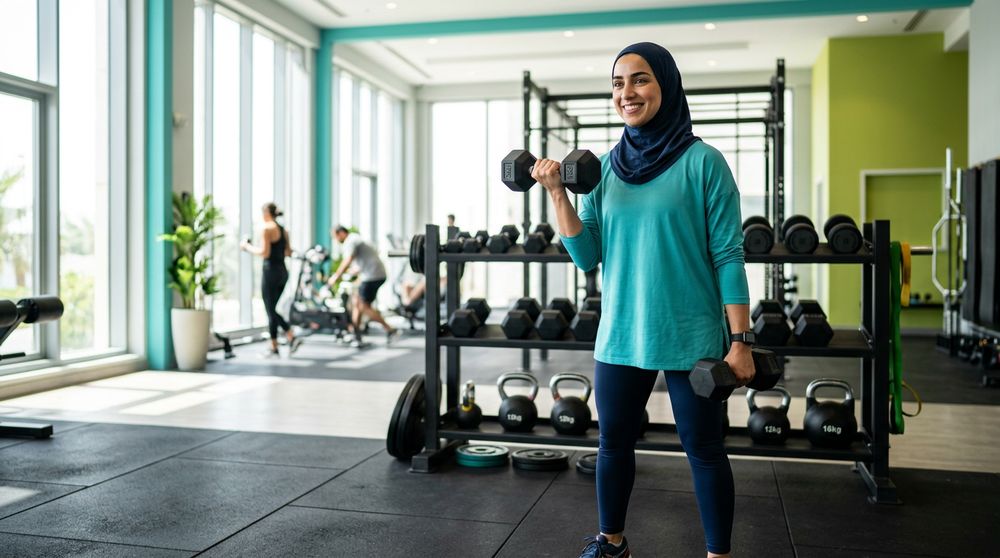
Walk into almost any gym and you will notice a quiet pattern: many women head straight for the treadmill and the light pink dumbbells, while the weights rack stays crowded with men. Behind that pattern sits one persistent fear, that lifting weights will make you bulky. The truth is very different. Strength training is one of the most useful habits a woman can build for her health, her energy and her confidence. In this practical guide from Proof Health, you will learn the facts behind the most common myths, the real benefits of resistance training, a simple 3-day starter plan, how much protein to eat, and how to train safely in Riyadh's climate.
Myth 1: Lifting Weights Will Make You Bulky
This is the biggest worry, and it deserves a clear answer. Muscle growth varies from person to person and is shaped by factors such as training, nutrition and genetics; lifting weights alone does not automatically create a bulky appearance. What most women notice instead is a firmer, more defined look, because muscle tone improves while body fat gradually falls. If you ever feel you are gaining more size than you want, you can adjust your calories and training volume, so you stay in control.
Myth 2: Cardio Is Better Than Weights for Fat Loss
Cardio burns calories while you do it, and it is excellent for your heart. Strength training can help maintain lean muscle as part of a balanced approach to weight management. Muscle may also be affected during weight loss, so strength training can support it. The best approach is a combination: strength training two to three days a week, plus walking or other cardio you enjoy.
Myth 3: Heavy Weights Are Dangerous for Women
Lifting is not dangerous when it is progressive and well supervised. In fact, controlled resistance training is associated with fewer falls and injuries later in life, because stronger muscles protect joints and improve balance. The key is to start light, learn the movement pattern, and increase the load gradually. Pain and poor form are the problems, not the weights themselves.
The Real Benefits of Strength Training for Women
- Stronger bones: Strength training may help support bone health.
- Body composition: Strength training may help improve body composition.
- Weight management: As part of a balanced plan, strength training may support weight management.
- Everyday strength: carrying shopping bags, lifting children, climbing stairs and standing up from the floor all become easier.
- Consistency: Choosing an activity you enjoy may help make movement part of your routine.
- Confidence: Tracking your progress may give you a sense of achievement.
The CDC recommends that adults do muscle-strengthening activities involving all major muscle groups on at least two days each week, in addition to aerobic activity.
How to Start: Five Simple Rules
- Begin with full-body sessions. Training the major muscle groups at least two days a week aligns with general guidance.
- Choose a weight you can control. Choose resistance you can control while maintaining good form, even when the final repetitions feel challenging.
- Learn form first. Film yourself, use a mirror, or ask a qualified coach to check your squat and hinge.
- Progress slowly. When you can complete all sets at the top of the repetition range with good form, increase the weight by the smallest step available.
- Rest between sets. Take 60 to 90 seconds, and leave at least one day between sessions.
A 3-Day Starter Plan for Beginners
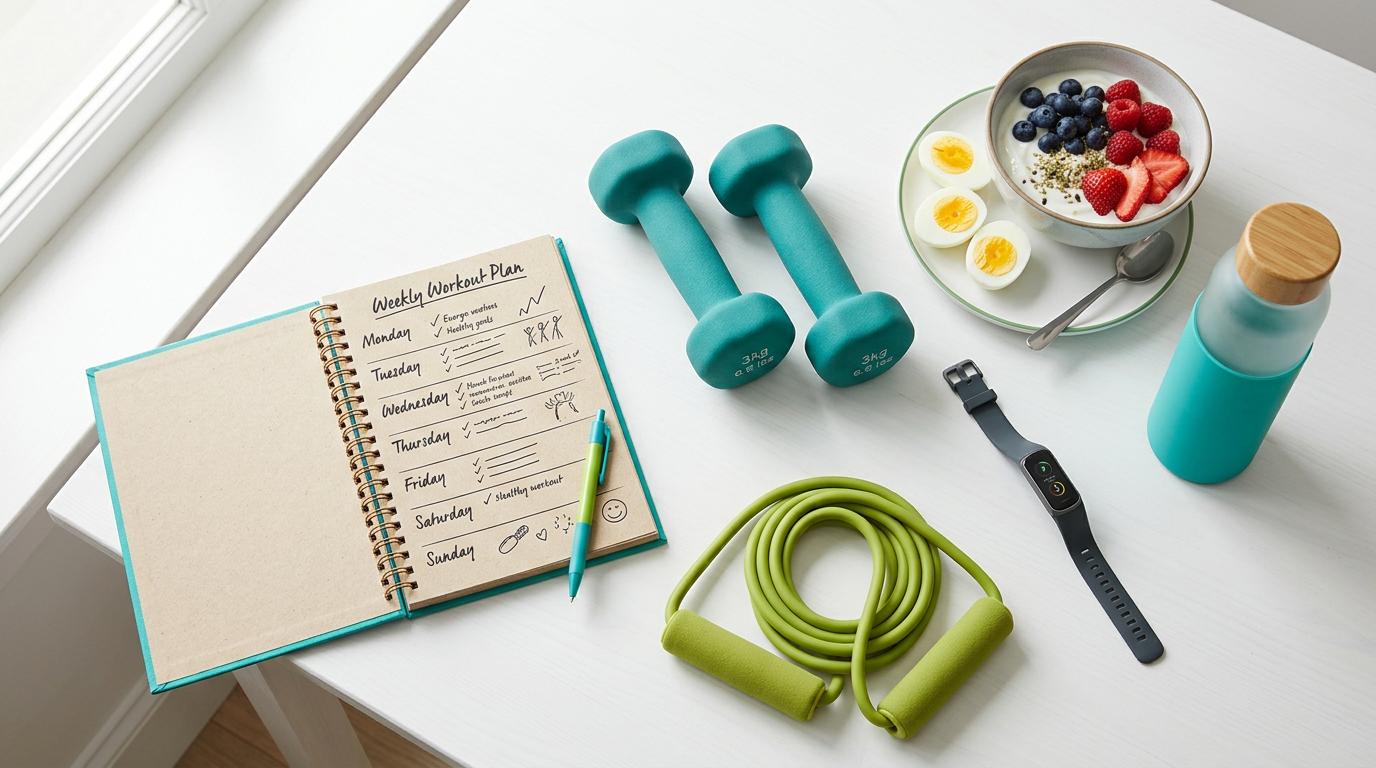
Train on non-consecutive days, for example Sunday, Tuesday and Thursday. Begin each session with a gentle warm-up of easy marching, arm circles and bodyweight squats.
Day 1 and Day 3: Full Body A
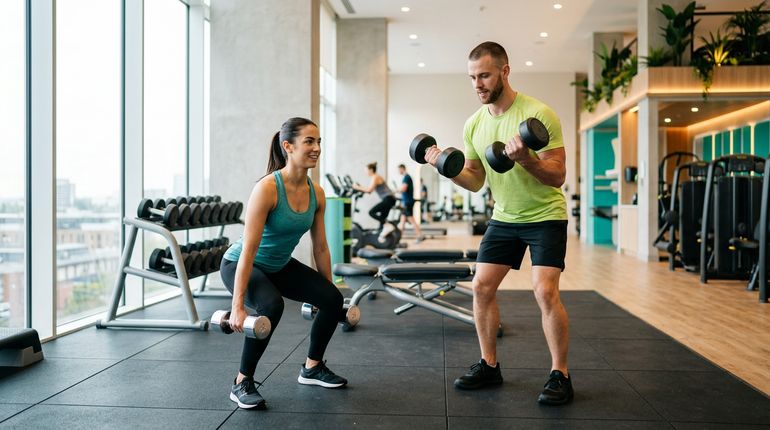
- Goblet squat: 3 sets of 10 to 12 repetitions
- Dumbbell Romanian deadlift: 3 sets of 10 repetitions
- Incline or knee push-up: 3 sets of 8 to 12 repetitions
- One-arm dumbbell row: 3 sets of 10 repetitions on each side
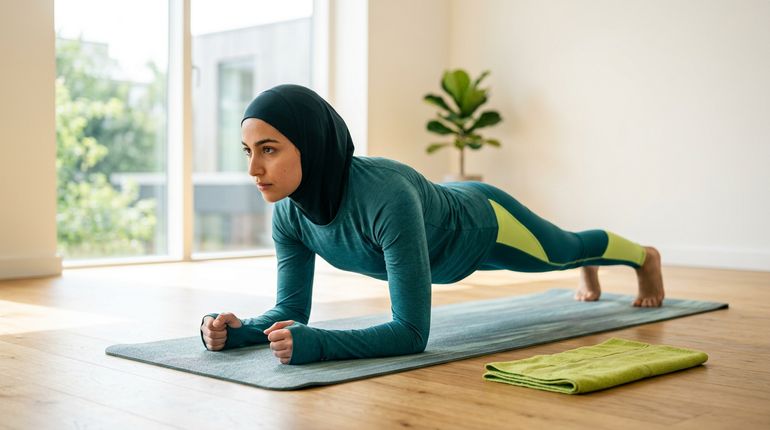
- Plank: 3 holds of 20 to 30 seconds
Day 2: Full Body B
- Glute bridge or hip thrust: 3 sets of 12 repetitions
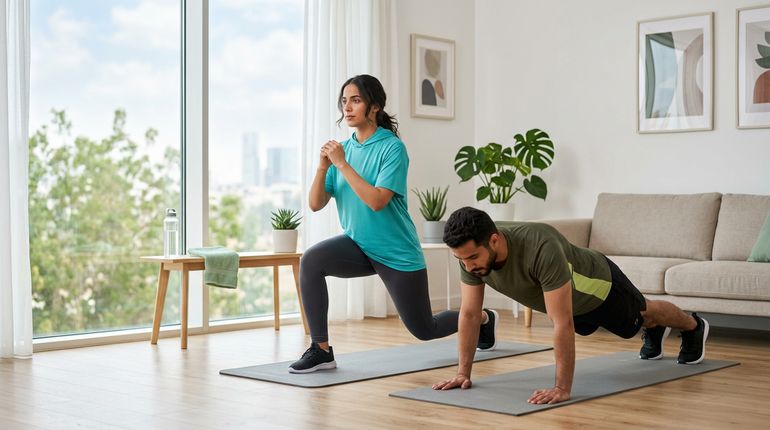
- Split squat: 3 sets of 8 repetitions on each leg
- Dumbbell shoulder press: 3 sets of 10 repetitions
- Resistance-band pull-apart or lat pulldown: 3 sets of 12 repetitions
- Dead bug: 3 sets of 8 repetitions on each side
Follow this plan, then add a little weight or one extra set to each exercise when you can complete the repetitions with good form. As you gain experience, you can move to an upper/lower split.
How Much Protein Do You Need?
Muscle needs raw material to repair and grow. Protein can come from a variety of foods, and needs differ from person to person; consult a registered dietitian to determine what is right for you. Good sources include eggs, Greek yogurt, labneh, chicken, fish, lentils, chickpeas and cottage cheese. A protein powder can be a convenient addition if food alone is not enough, but choose a product that is registered and independently tested. Women with kidney disease or other medical conditions should check their protein intake with a doctor first.
Do not forget iron and vitamin D. Many women in Saudi Arabia have low vitamin D despite the sunshine, and low iron can make training feel unusually exhausting. A simple blood test can tell you whether you need to act.
Training Safely in Riyadh's Heat
- Train indoors in an air-conditioned space, or outdoors only early in the morning or after sunset.
- Drink water before, during and after your session, and only add electrolytes when needed under professional guidance.
- Wear light, breathable, comfortable clothing and supportive shoes.
- Stop immediately if you feel dizzy, nauseous or unusually weak.
Common Mistakes to Avoid
- Staying with very light weights forever: your muscles need a gradual increase in challenge to adapt.
- Skipping the legs and back: the largest muscles give the biggest benefits for strength and metabolism.
- Not eating enough: training hard on very low calories slows recovery and progress.
- Judging by the scale only: weight can stay stable while body shape improves, so also track measurements, photos and the weights you lift.
- Sleeping too little: prioritize restful sleep to support recovery.
When to Speak With a Doctor or Specialist
If you are pregnant or postpartum, have a chronic condition, high blood pressure, joint pain, or are returning after an injury, speak with your doctor or a licensed coach before starting. Stop and seek medical advice if you feel chest pain, severe dizziness, unusual shortness of breath or sharp joint pain. This article is for general awareness and does not replace medical advice.
Quick Recap
- Lifting weights will not make you bulky by accident; it builds strength, shape and healthy bones.
- Train the whole body at least two days a week and progress slowly.
- Choose varied protein sources and prioritize good sleep.
- If fatigue continues, consult a health professional to assess it and determine whether testing is appropriate.
- Train smart in the heat and stop if something feels wrong.
Frequently Asked Questions
Will lifting make women bulky?
Not automatically; muscle growth varies and is affected by training and nutrition.
How often should I strength train?
Guidance recommends strengthening all major muscle groups at least two days a week.
Do I need a gym?
No. You can start with bodyweight exercises or suitable resistance while learning good form.
How do I choose resistance?
Choose resistance you can control with good form, then progress gradually.
Do I need protein supplements?
Not necessarily; protein comes from varied foods. A dietitian can advise on your needs.
When should I consult a professional?
Ask a doctor if pregnant or postpartum, if you have a chronic condition or injury, or have health concerns.
Sources
- CDC: Adult activity guidelines — muscle strengthening on two or more days weekly.
- Mayo Clinic: Strength training benefits — benefits, bone health and safe training.
Read Also
Ready for the Next Step With Proof Health?
If you want a strength program designed for your level and goals, a nutrition plan that supports muscle and recovery, or personal coaching that keeps you progressing safely, the Proof Health team is here to guide you step by step. Contact us now through our website and book your consultation to start your journey toward a stronger, healthier you with confidence.