Protein Bars vs Ready-to-Drink Shakes: How to Choose the Right One for Your Goal Without the Sugar Trap
Walk down any supermarket aisle, or open almost any gym bag, and you will find protein bars and ready-to-drink shakes promising quick results: stronger muscles, longer fullness and a lower number on the scale. But behind the glossy wrapper, a bar can look a lot like a candy bar, and a bottled shake can carry the sugar of a soft drink. The real question is not which one is better in general, but which one fits your situation, your goal and your budget. In this guide we compare bars and shakes on protein, sugar, fullness and cost, give you a six-point label check you can run in thirty seconds, a practical one-week plan and the mistakes to avoid.
A ready-to-drink shake is usually lighter, faster and lower in calories per gram of protein, while a bar keeps you full longer and travels better but may bring more sugar and calories. Whichever you choose, check three numbers before buying: grams of protein, added sugar and calories. Real food stays the foundation; a packaged product is a tool for the moments when cooking a meal is not realistic.
How much protein do you actually need?
Before comparing products, set your daily target. The International Society of Sports Nutrition position stand states that 1.4 to 2.0 grams of protein per kilogram of body weight per day is sufficient for most exercising people to build and maintain muscle. For a single serving it suggests about 0.25 grams per kilogram, or an absolute dose of 20 to 40 grams of high-quality protein, spread roughly every three to four hours across the day.
A practical example: a 70 kg person needs roughly 98 to 140 grams a day, which is about 25 to 35 grams at each main meal plus one or two snacks. If you can reach that with eggs, yogurt, chicken, legumes and fish, you do not need any packaged product at all. The same position stand reminds athletes to focus on whole foods that contain all the essential amino acids, and describes supplements as a practical way to secure adequate protein quality and quantity while limiting calories. To work out your own number, read how much protein you really need and when supplements make sense.
Protein bars: when they help and when they let you down
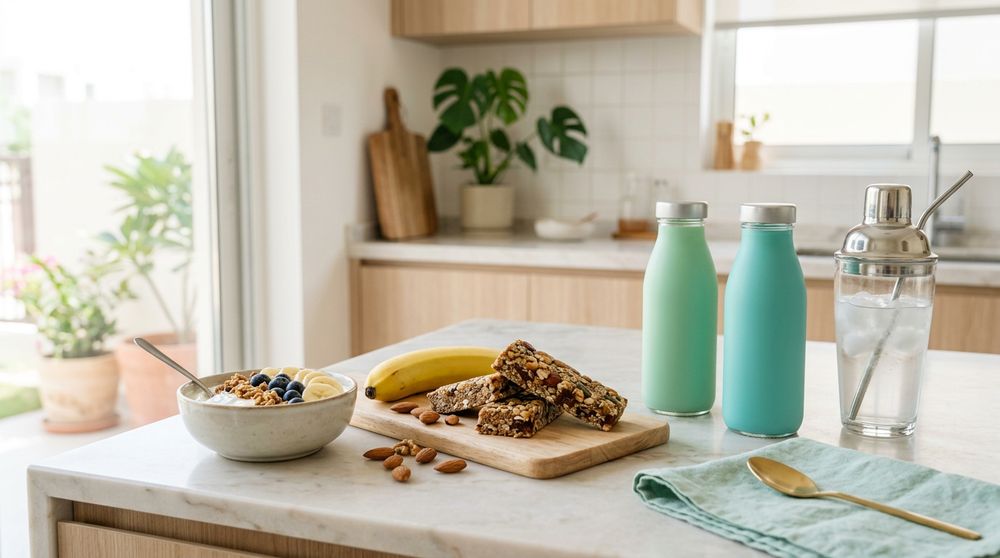
The biggest advantage of a bar is that it is solid food you have to chew, and it usually combines protein with carbohydrates, fat and fiber, so it tends to keep you full longer than many drinks. It is ideal for travel, work and the car because it needs no fridge and no shaker. Dietitians note that bars made from whole ingredients such as nuts, seeds, dried fruit and whole grains can be a better choice than candy, pastries or chips.
The other side matters just as much. In a consumer test of energy and protein bars, dietitians warned that some bars with a high-protein claim are little more than glorified candy bars, and that the healthiest picks are made mostly from unprocessed foods with little added sugar. An independent review of nutrition bars also found products that did not match their label for fat and carbohydrates, and noted that many are ultra-processed foods. On top of that, bars labeled sugar-free often use sugar alcohols, which can cause bloating, gas and diarrhea in some people; look for ingredients ending in -ol.
Ready-to-drink shakes: speed, lightness and traps
A ready-to-drink shake delivers a large dose of protein for relatively few calories, which helps people who are cutting calories but want to protect their muscle. Dietitians offer a simple comparison: a 12-ounce can of cola contains nearly 37 grams of sugar and no protein, while most protein shakes contain little or no sugar, so swapping one for the other cuts sugar and calories clearly. Shakes also suit people who feel little hunger at certain times of day or forget to eat during a busy shift because they are easy to sip.
The drawbacks: liquids bypass chewing, so you may feel hungry sooner than after a solid food. Some premade shakes add noticeable sugar for taste, so the Nutrition Facts panel must be read before you buy. Also watch out for products that rely on collagen alone as their protein; it is an incomplete protein and does not replace a complete protein for muscle building, as we explained in our article on collagen supplements.
Quick comparison: bar or shake?
| Criterion | Protein bar | Ready-to-drink shake |
|---|---|---|
| Fullness | Usually longer: solid, with fiber and fat | Usually shorter: liquid |
| Calories per gram of protein | Usually higher | Usually lower |
| Hidden sugar risk | High in some types (dates, chocolate, syrups) | Present in sweetened and dessert-style flavors |
| Portability and storage | Excellent, but can melt in a hot car | Good; best chilled before drinking |
| Best situation | Snack between meals, travel, long gaps | After training, low-appetite days, replacing a sugary drink |

The 6-point label check in 30 seconds
Turn the package over and read the back, not the front, then run through these points. The numbers below are practical rules of thumb from Prof Health for healthy adults, not official limits.
- Protein: look for 15 to 25 grams per serving, close to a useful dose for the body. Under 10 grams is not really a protein source.
- Protein source: the first protein named in the ingredient list is the product's real identity. Prefer whey, casein, egg or a complete plant blend, and avoid relying on collagen alone.
- Added sugar: aim for under 5 grams in a shake and under 8 grams in a bar where possible, and do not confuse the natural sugar in milk and dates with added sugar.
- Calories versus protein: an easy rule is at least 8 grams of protein per 100 calories. A 200-calorie bar with 20 grams passes; a 300-calorie bar with 10 grams does not.
- Sugar alcohols and additives: if your stomach is sensitive, look for ingredients ending in -ol and try a small amount first. The shorter the ingredient list, the easier the check.
- Trust: confirm the product is registered with the Saudi Food and Drug Authority, comes from a reliable source and is in date. For details see our 7-step safety check and how to read a supplement label.
Which one fits your goal?
- Weight loss: total calorie deficit is what counts. A low-sugar shake gives you protein for few calories, and a bar helps only if it replaces a higher-calorie snack rather than being added on top. A 200-calorie bar only helps if it stops you eating more later.
- Building muscle: after training a simple shake plus a proper meal later works well; what matters is reaching your daily protein and spreading it out. The dose beats the brand name.
- Busy days and travel: keep one good bar in your bag for emergencies; a sensible snack is better than a long hunger followed by fast food.
- Sensitive digestion: choose a shake with a short ingredient list or a bar made from whole ingredients, and avoid sugar alcohols.
A practical one-week plan
| Day | Situation | Suggested choice |
|---|---|---|
| Saturday | Evening strength session | Low-sugar shake, then a full dinner |
| Sunday | Long workday | Whole-ingredient bar mid-afternoon with water |
| Monday | Late breakfast | Greek yogurt and eggs instead of a packaged product |
| Tuesday | Travel or a long errand | Backup bar in your bag |
| Wednesday | Morning workout | Protein shake and a banana before work |
| Thursday | Rest day | Real food only; review your weekly protein |
| Friday | Family gathering | Enjoy the meal and count nothing |
Common mistakes to avoid
- Trusting a high-protein claim on the front without reading sugar and calories on the back.
- Adding a bar or shake on top of your meals instead of replacing something, which raises total calories.
- Using packaged products as a permanent substitute for whole food.
- Ignoring sugar alcohols and then wondering about bloating.
- Storing bars and bottles in a closed car under the Riyadh sun.
- Comparing by price per package instead of price per gram of protein.
Not sure which product really suits you?
Prof Health specialists review your goal, your food, your schedule and any medicines or supplements you take, then build a personal protein and nutrition plan with online follow-up, so you stop guessing in front of the shelf.
Book your online nutrition consultation Join the Challenge programFrequently asked questions
Can a protein bar replace a full meal? Occasionally, and as an exception. A good bar beats skipping food, but it does not replace the variety of vegetables, whole grains and natural protein. Treat it as a stopgap, not a daily habit.
Which is better after training? Both work if you reach a suitable protein dose. A shake is lighter and easier right after exercise, while a bar suits you if your next meal is delayed. What matters most is your total protein for the day and consistent training.
Are ready-to-drink protein shakes safe for everyone? They are generally suitable for healthy adults, but pregnant or breastfeeding women, people with kidney disease or diabetes and anyone taking certain medicines should ask a doctor or dietitian first.
Do I need a supplement if my diet is already high in protein? Probably not. A supplement is a tool for filling a gap, not a requirement for results.
Note: This article is for general education and does not replace advice from a doctor or dietitian. Figures apply to healthy adults in general and vary from person to person.
References
- International Society of Sports Nutrition Position Stand: protein and exercise - Source link
- Yahoo Health - Dietitians compare protein bars and protein shakes - Source link
- Consumer Reports - The best and worst energy bars - Source link
- ConsumerLab - Nutrition bars review - Source link