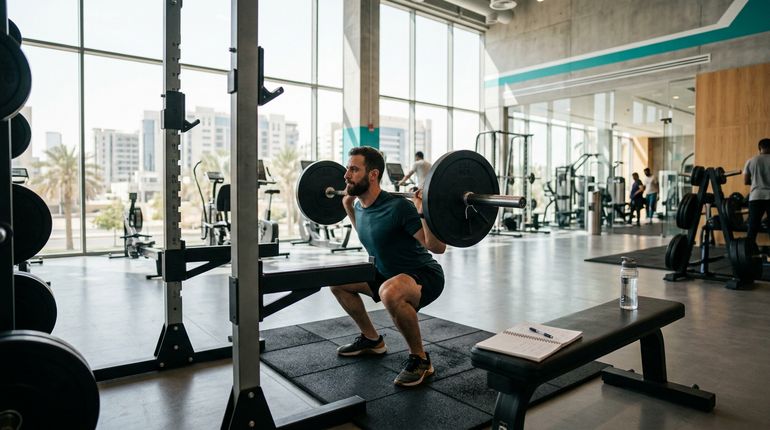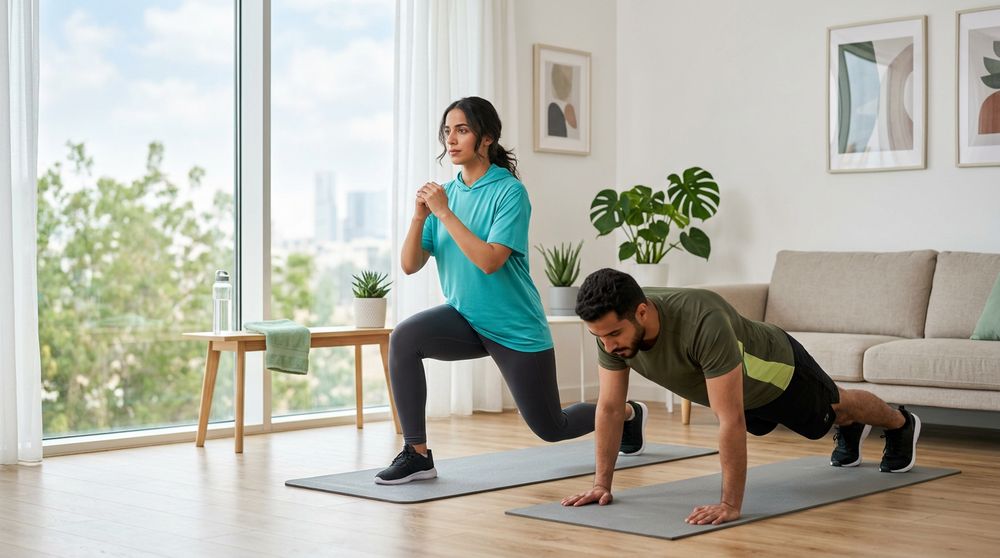
Build Muscle With Bodyweight Only: Progression Ladders for Push-Ups, Squats, Pulls and Core — A Practical Home Plan
Quick Answer
Yes, for many people, especially beginners, bodyweight training can build muscle, as long as you keep progressing: make each exercise harder over time through leverage, tempo and repetitions, train at least two days a week, eat enough protein and sleep well.
Many people believe you need a fully equipped gym to build muscle. In reality, your muscles respond to tension and effort, not to the brand of the equipment. If you travel often, prefer to train privately, or simply have no time to commute to a gym, your own body weight can be a very effective tool, provided you know how to make it harder over time. In this practical guide from Proof Health, you will learn how bodyweight training builds muscle, how to progress each movement step by step with simple ladders, a weekly plan you can start tonight, and how to eat, sleep and train safely in Riyadh's climate.
Can Bodyweight Training Really Build Muscle?
Yes, for most people it can, especially beginners and intermediates. Muscle growth depends mainly on how close your sets are to muscular fatigue, and not only on how heavy the load is. Mayo Clinic explains that working a muscle until it is hard to complete another repetition is usually enough to make it stronger. That is good news for home training: a hard push-up variation performed until you have only one or two clean repetitions left can challenge your chest, shoulders and triceps in a meaningful way.
It is also worth remembering the general public-health guidance. The US Centers for Disease Control and Prevention (CDC) recommends that adults do muscle-strengthening activities on two days per week, in addition to aerobic activity. Bodyweight sessions fit that recommendation perfectly.
To be honest about the limits: bodyweight training makes it harder to load the legs very heavily, and advanced lifters chasing maximum size will eventually benefit from added resistance. But for building a solid foundation of strength and muscle, it is more than enough for months of progress.
The Golden Rule: Progressive Overload Without Weights
Muscles grow when you gradually ask more from them. With dumbbells you simply add weight. With body weight you have five other levers, and you can pull one at a time:
- Change the leverage: move to a harder variation, such as feet-elevated push-ups instead of regular push-ups.
- Slow the tempo: take 3 seconds to lower and pause for 1 second at the bottom. Time under tension rises without any equipment.
- Add repetitions: work toward the top of a range, for example 8 to 12, then move to a harder variation.
- Go unilateral: train one arm or one leg at a time so your body weight is shared by fewer muscles.
- Shorten rest or add pauses: rest 60 to 90 seconds between sets, or add a pause at the hardest point of the movement.
A simple rule for moving up a step: when you can complete 3 sets of 12 clean repetitions with good form, move to the next variation on the ladder and start again at around 6 to 8 repetitions.
The Push Ladder: Chest, Shoulders and Triceps
Standard push-ups load a large share of your body weight, so a ladder lets you start at your level and climb safely:
- Wall push-ups: for complete beginners or those returning after a break.
- Incline push-ups: hands on a sturdy table or sofa edge; lower the height as you improve.
- Knee push-ups or regular push-ups: keep a straight line from head to hips.
- Slow-tempo push-ups: 3 seconds down, 1 second pause.
- Feet-elevated push-ups: feet on a chair to shift more load to the shoulders and upper chest.
- Archer or pseudo-planche push-ups: advanced options that move toward one-arm strength.
The Squat and Lunge Ladder: Quads, Glutes and Hamstrings
Legs are the most difficult area to overload with body weight alone, so tempo and single-leg work matter most:
- Box squats: sit back to a chair and stand without using your hands.
- Bodyweight squats: full range of motion, heels flat.
- Tempo squats: 3 seconds down, 2 seconds pause at the bottom.
- Reverse lunges and split squats: back foot on the floor, then raised on a sofa for the Bulgarian split squat.
- Assisted pistol squats: hold a door frame lightly while lowering on one leg.
For the back of the thighs and glutes, add the glute bridge, then the single-leg glute bridge, then the feet-elevated single-leg bridge. These are gentle on the knees and easy to perform on a mat.
The Pull Ladder: Back and Biceps
Pulling is the part most home programs miss, yet a strong back improves posture, especially if you sit for long hours. You do not need a fancy bar. Choose what suits your home:
- Towel or backpack rows: a loaded backpack held in one hand while bent forward.
- Table inverted rows: lie under a very sturdy table and pull your chest up to the edge. Check that the table is stable first.
- Doorway-bar or pull-up bar negatives: jump up and lower yourself for 4 to 5 seconds.
- Assisted pull-ups with a resistance band, then full pull-ups.
Resistance bands are inexpensive, light and travel well, so they are a smart addition if you want more pulling options.
The Core Ladder: Abs and Trunk Stability
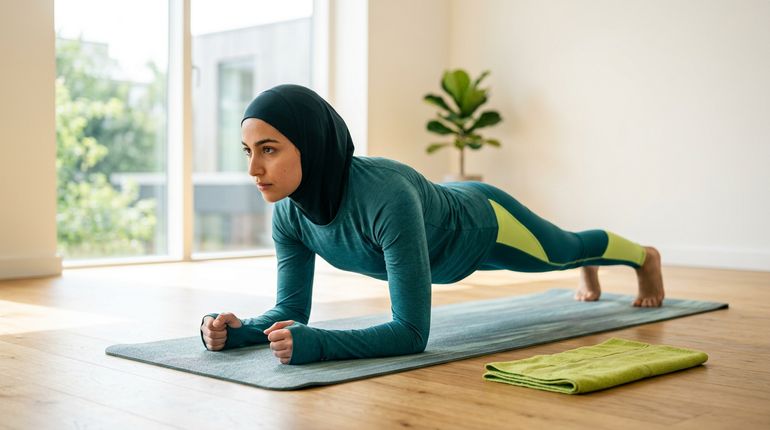
A strong core transfers force between your upper and lower body. Progress from a dead bug to a forearm plank (aim for 30 to 60 seconds with a tight body), then to a plank with shoulder taps, a hollow-body hold and finally slow leg raises. Quality beats duration: stop the set when your lower back starts to sag.
A Sample 4-Day Weekly Plan
Use this plan for 4 to 8 weeks, then move up the ladders. Rest at least one day between the two upper-body days and the two lower-body days.
| Day | Focus | Exercises (sets x reps) |
|---|---|---|
| Saturday | Upper body | Push-up variation 4 x 8-12; Inverted or backpack row 4 x 8-12; Pike push-up 3 x 6-10 |
| Sunday | Lower body | Tempo squat 4 x 10-12; Reverse lunge 3 x 8-10 per leg; Glute bridge 3 x 12-15 |
| Monday | Rest or walk | 30 minutes of easy walking and mobility work |
| Tuesday | Upper body | Feet-elevated push-up 4 x 6-10; Band pull-apart 3 x 15; Dead bug to plank 3 rounds |
| Wednesday | Lower body | Split squat 4 x 8-10 per leg; Single-leg glute bridge 3 x 10-12; Calf raises 3 x 15-20 |
| Thursday-Friday | Rest | Light activity, good sleep, balanced meals |
Start each session with 5 to 8 minutes of warming up, and keep every set about one to three repetitions short of failure, which is demanding but safe. As the weeks pass, apply the progression rule from the previous section.
Eat and Recover to Grow
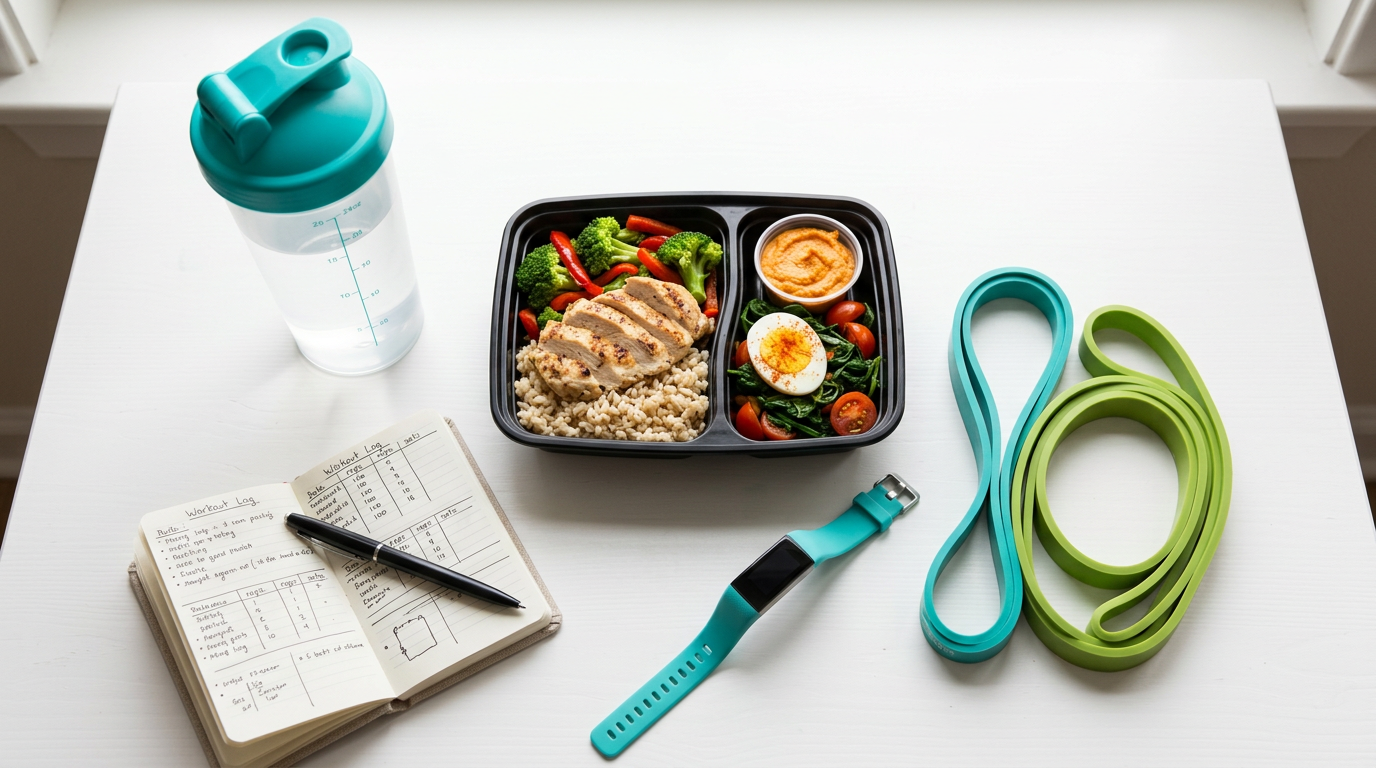
Training is only the signal; your body builds muscle during recovery. Getting enough protein each day supports muscle gain for most healthy adults, and the right amount varies with your weight, your goal and your health, so it is best to have a nutrition specialist set it for you. Good sources include eggs, chicken, fish, Greek yogurt, lentils, chickpeas and fava beans.
Do not forget the rest of your plate: carbohydrates such as rice, oats and dates fuel your sessions, while vegetables and healthy fats support general health. Aim for enough regular sleep, because poor sleep can reduce recovery and increase hunger. If you are considering supplements, treat them as an addition, not a replacement for food, and choose products that are registered and tested.
Training Safely in Riyadh's Heat
- Train indoors in an air-conditioned room, or outdoors only early in the morning or after sunset.
- Drink water before, during and after your session, and add electrolytes if you sweat heavily.
- Wear light, breathable clothes and use a non-slip mat.
- Stop immediately if you feel dizzy, nauseous or unusually weak.
Common Mistakes to Avoid
- Never progressing: doing the same easy push-ups for months stops the signal for growth.
- Rushing repetitions: speed hides weak form; slow down.
- Skipping pulling and legs: an upper-body-only routine leaves you unbalanced.
- Eating too little protein or sleeping too little: both slow your results.
- Comparing yourself with others: measure progress against your own repetitions and photos every 4 weeks.
When to Speak With a Doctor or Specialist
If you have a chronic condition, joint pain, high blood pressure, are pregnant, or are returning after an injury, speak with your doctor or a licensed coach before starting. Stop training and seek medical advice if you feel chest pain, severe dizziness, unusual shortness of breath, or sharp pain in a joint. This article is for general awareness and does not replace medical advice.
Quick Recap
- Muscle responds to effort and tension, so bodyweight training can build muscle when you keep progressing.
- Use five levers: leverage, tempo, repetitions, single-limb work and rest.
- Climb the push, squat, pull and core ladders when you reach 3 x 12 with clean form.
- Eat enough protein spread across your meals, and sleep enough.
- Train smart in the heat and stay hydrated.
Read Also
- Full Body, Upper/Lower or Push-Pull-Legs? How to Choose the Best Training Split
- Deload Weeks: When You Need One and How to Do It Right
- From Zero to 5K: An 8-Week Run/Walk Plan for Beginners in Riyadh
Frequently Asked Questions
Do I need equipment to get started?
No. A sturdy chair, a solid table, a backpack and an exercise mat are enough to begin, and you can add a resistance band later for more pulling options.
How many days a week should I train?
The sample plan above uses four days. Mayo Clinic advises resting one full day between training each specific muscle group so your muscles have time to recover.
Does this approach suit women?
Yes. Gradual progression works for everyone; start at the easiest step of each ladder and climb at your own pace.
How long until I see results?
Results vary with consistency, nutrition and sleep, so it is better to track your repetitions and photos every 4 weeks rather than relying on the scale alone.
Can I combine these workouts with weight loss?
Yes. Regular training with a balanced eating pattern supports fat loss while helping you keep muscle, and a nutrition specialist can tailor the plan to you.
Ready for the Next Step With Proof Health?
If you want a training program designed for your level and goal, a nutrition plan that supports muscle building and recovery, or personal coaching that keeps you progressing safely, the Proof Health team is here to guide you step by step. Contact us now through our website and book your consultation to start your journey toward better fitness and health with confidence.
- Book an online nutrition consultation
- Discover The Challenge by Proof Health: your personalized transformation program
WhatsApp: 0557 340 413